
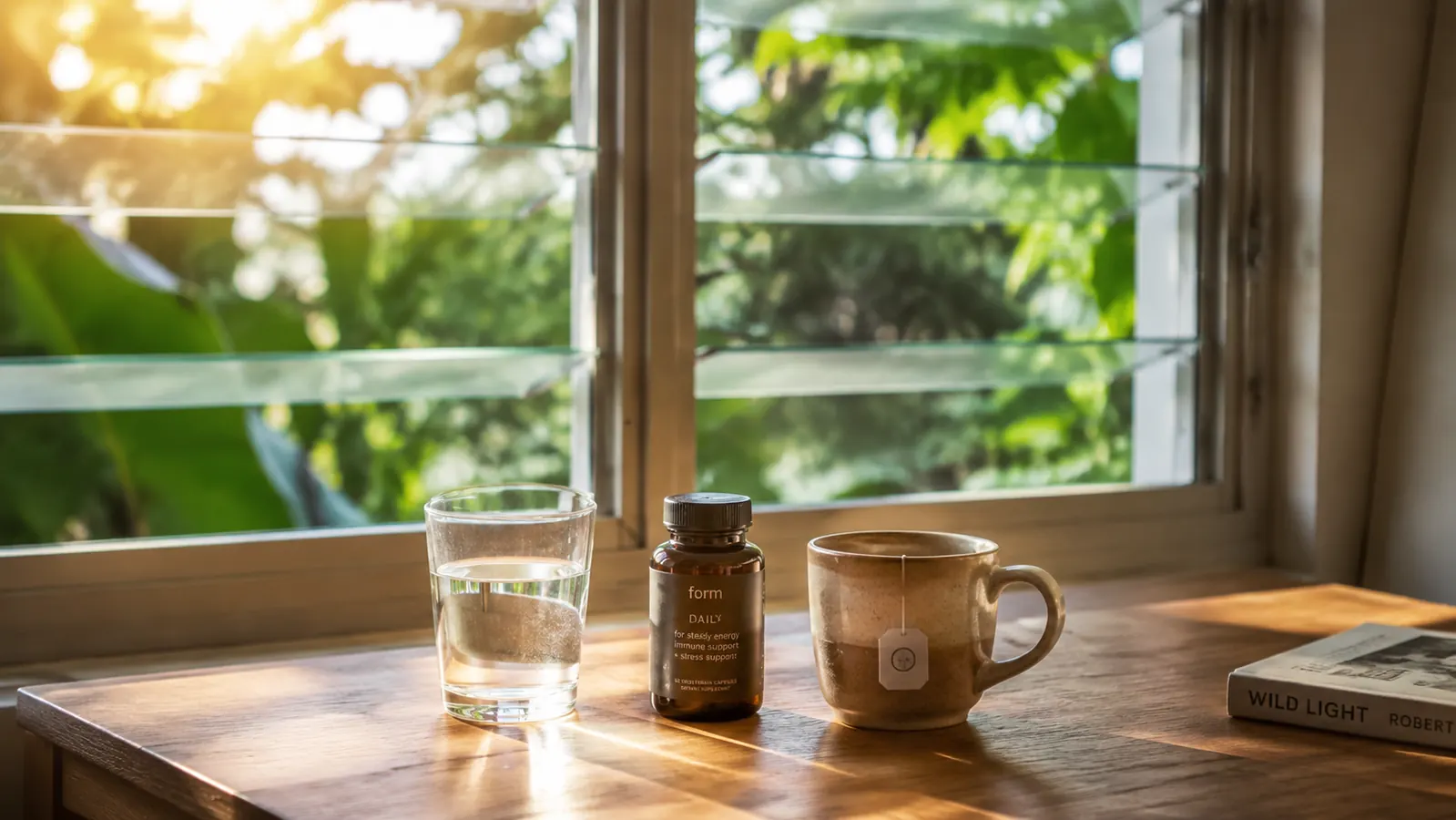
Stress at 70 does not feel the way it did at 40. At 40, stress was loud. You could feel it in your chest, your jaw, your shoulders. At 70, it settles in differently. It becomes a low hum you stop noticing until you realize you have not had a full night of sleep in two weeks, your patience runs out by mid-morning, and you can not quite remember what it felt like to feel steady. That is where I was about eight months ago, before I started taking Physician's CHOICE KSM-66 Ashwagandha consistently.
I had read about adaptogens for years. In traditional Hawaiian healing, we have always known that plants carry something science is still working to name. Ashwagandha is not a Hawaiian plant, it comes from the Ayurvedic tradition of India, but the logic is familiar: certain roots help the body resist what would otherwise knock it sideways. The research on KSM-66, a specific ashwagandha root extract standardized to 5% withanolides, is more solid than most supplements I have looked into. I am not here to make promises on its behalf. But I can walk you through what I do, and what I have noticed.
Still running on empty by 10am? This is the ashwagandha supplement I use every day.
Physician's CHOICE KSM-66 Ashwagandha uses a clinically studied extract standardized to 5% withanolides, paired with black pepper for absorption. It has over 7,500 reviews on Amazon and a 4.5-star average. If you want to follow the steps in this guide, this is the one to start with.
Amazon Check Today's Price on Amazon →Why Ashwagandha Works Differently Than Other Approaches
Before we get into the steps, it helps to understand what ashwagandha is actually doing. It is classified as an adaptogen, which means it works on the body's stress-response system rather than masking symptoms the way a sedative would. The research suggests it helps regulate cortisol, the primary stress hormone. High cortisol in the evenings is one of the main reasons people lie in bed alert when they should be drifting off. It is also connected to the pattern where you feel exhausted but wired.
KSM-66 in particular has been tested in several clinical studies. One published in the Indian Journal of Psychological Medicine followed 64 adults with chronic stress over 60 days. Those who took KSM-66 showed significantly lower cortisol levels and scored measurably better on stress and anxiety assessments compared to the placebo group. That does not mean it works for everyone. But it is more evidence than most supplements can point to, and it lines up with what I have personally experienced. It is not a dramatic shift. It is a quieting.
Step 1: Pick the Right Form and Dose Before You Start
Not all ashwagandha is the same. This is the part most articles skip over. There are dozens of products using different root extracts, different concentrations, and different fillers. If you try a cheap generic and nothing happens, you may wrongly conclude ashwagandha does not work for you. KSM-66 is a specific branded extract made by Ixoreal Biomed, produced from the root only (not the leaves), and standardized to contain at least 5% withanolides, the active compounds. Physician's CHOICE uses 1,000mg per serving, which falls within the range studied in clinical trials.
The capsules also include black pepper extract (BioPerine), which research suggests improves absorption of certain plant compounds. This matters because even a well-standardized extract needs to actually reach your bloodstream to do anything. Start with the recommended dose on the label, which for Physician's CHOICE is two capsules daily. Do not double up thinking more will work faster. Adaptogens are slow medicine. Give it four to eight weeks before you decide whether it is working.
If you have a thyroid condition, are pregnant, or take sedatives or immunosuppressant medications, talk to your doctor before starting. Ashwagandha can interact with thyroid medications and may have mild sedative properties that compound with other drugs. For most healthy adults, it is well-tolerated, but this step matters before any of the others.
Step 2: Time Your Dose for Maximum Calm
When you take ashwagandha matters more than most people realize. The research on KSM-66 does not prescribe a single timing, but clinical studies have used both morning and evening dosing with good results. What I have found personally, and what many people report, is that taking it in the evening with dinner is especially helpful if your main complaint is restless sleep or an overactive mind at night.
My own routine is one capsule with breakfast and one capsule with dinner. The morning capsule I think of as setting a baseline for the day. The evening capsule I think of as helping my nervous system wind down before bed. If sleep is your main concern, try taking both capsules in the evening with your meal for the first two weeks and see how that feels. If energy and daytime steadiness are your goal, splitting the dose morning and evening tends to work well. Take it with food to reduce any chance of stomach upset.

Step 3: Add a Two-Minute Breathing Practice Between Noon and 2pm
Ashwagandha works on your body's chemistry. Breathwork works on your nervous system in real time. Together, they compound. The mid-afternoon window is when cortisol, which is naturally highest in the morning, starts its second small rise for many people. This is the time a lot of us reach for coffee, snap at someone we should not, or get that foggy, slightly anxious feeling with no clear cause. A two-minute breathing practice right in that window can interrupt the pattern.
The technique I use is simple. Breathe in for four counts, hold for four counts, breathe out for six counts, hold for two counts. Repeat that cycle eight times. It takes just under two minutes. The longer exhale activates the parasympathetic nervous system, the part that tells your body it is safe to relax. You do not need a meditation cushion or a quiet room. I have done this in my truck, at my kitchen table, in a folding chair watching the water. The place does not matter. The consistency does. Do it every day at roughly the same time for two weeks and notice whether the afternoon feels different.

Step 4: Build an Evening Routine That Signals Wind-Down
Ashwagandha can lower the floor of your stress response, but it cannot override a lifestyle that is wired for alertness right up until you try to sleep. The hour before bed matters enormously. Your body takes its cues from light, temperature, and activity. Screens emit blue light that suppresses melatonin. Arguments, news cycles, and financial worries activate the same stress hormones ashwagandha is trying to quiet. You are working against yourself if you take the capsule and then spend the next hour scrolling.
An evening wind-down does not need to be complicated. Turn down the lights an hour before bed. Put the phone down or switch it to warm-light night mode. Make a cup of non-caffeinated tea, something simple like chamomile or passionflower, and sit with it without multitasking. I sometimes read. Sometimes I just sit on the lanai and listen to what the night sounds like. My tutu used to say that the body knows how to rest, we just have to stop arguing with it. The supplement helps. The evening routine is what lets the supplement do its job.

The supplement helps. The evening routine is what lets the supplement do its job. You can not outrun a wired lifestyle with a capsule. But you can work with both.
Step 5: Track Three Simple Things Over Eight Weeks
Most people give up on supplements before they have any business judging whether they work. Adaptogens in particular are slow-acting. KSM-66 studies run for 60 to 90 days, not 10 days. If you want to know whether this is actually helping you, you need a way to notice changes that are happening gradually. Gradual changes are easy to miss when you are living inside them.
Keep a simple log, a single sheet of paper or a notes app, and track three things each morning. First, how rested you felt when you woke up, on a scale of one to ten. Second, how steady you felt through the afternoon, one to ten. Third, the first stressful thing that happened that day and how quickly you recovered from it. No elaborate journaling, just three numbers and one line of notes. Do this for eight weeks. At the end, look at the early entries and the late entries side by side. Most people who stick with this for eight weeks can see a pattern that would have been invisible without the log.
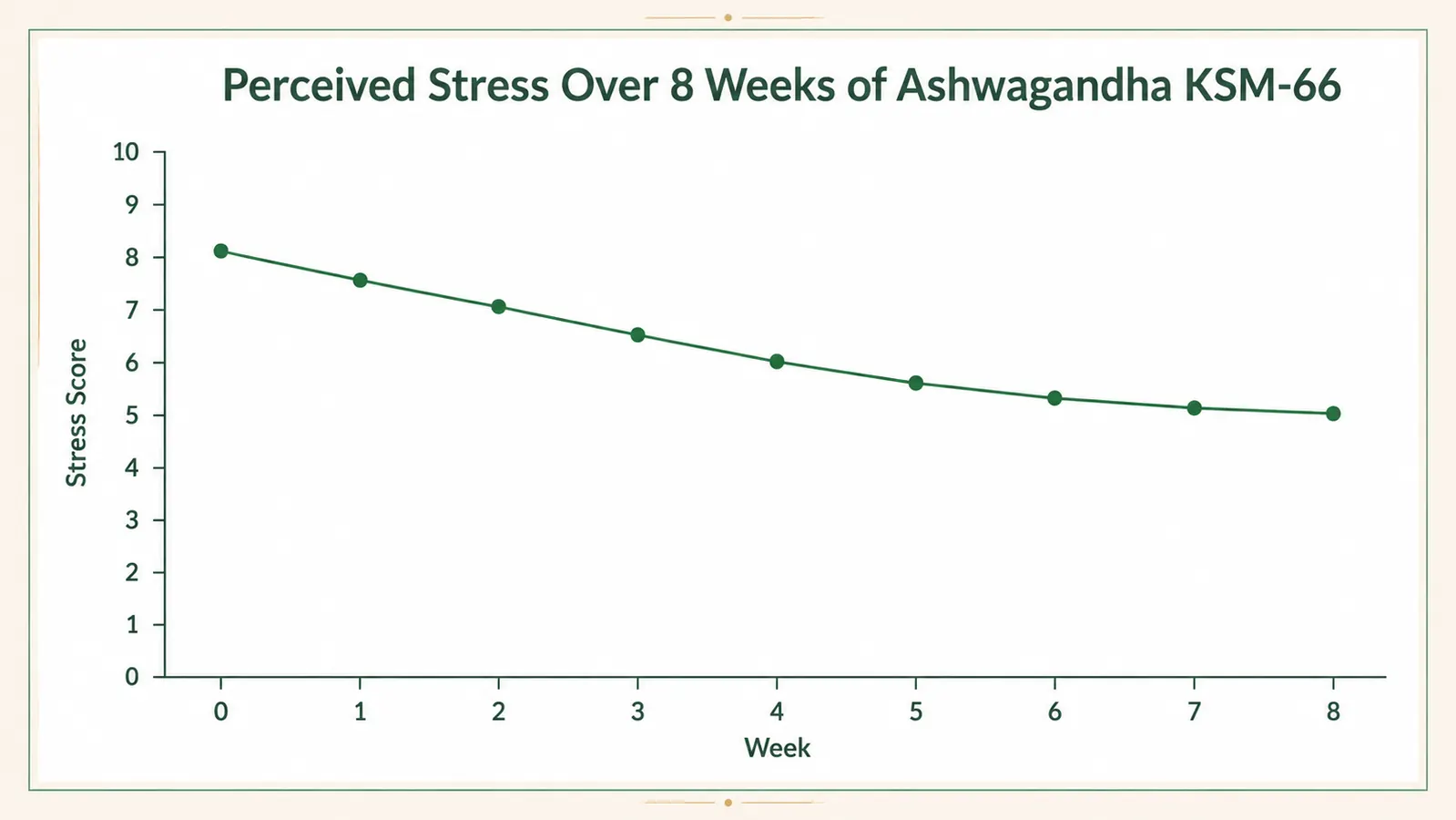
What you are looking for is not a dramatic transformation. You are looking for a quieter baseline. Fewer mornings where you wake up already braced for the day. Fewer afternoons where one small frustration tips the whole thing over. If you see that shift in the numbers over eight weeks, you have your answer.
What Else Helps
Ashwagandha is not the only tool in this kind of routine, and I would not want you to think of it that way. Sleep is still foundational. No supplement corrects genuinely disordered sleep. If you are waking up multiple times a night or have symptoms of sleep apnea, that is a conversation to have with your doctor, not something to manage with adaptogens. Similarly, chronic stress rooted in an ongoing situation, a difficult relationship, financial pressure, caregiving, does not dissolve because you take a root extract. The capsule can lower the physiological cost of stress. It does not resolve the source of it.
What I have found works well alongside ashwagandha: daily movement, even just a walk, which burns off excess cortisol; limiting caffeine after noon, which competes with your body's natural wind-down; and getting outside in the morning light, which helps anchor your circadian rhythm. In Hawaiian tradition, we would say that health is not one thing. It is the relationship between many things, each one supporting the others. The ashwagandha is one strand. These other practices are the rest of the weave.
If you are interested in how ashwagandha compares to other adaptogens, I wrote a full breakdown of ashwagandha versus rhodiola that you may find useful. Rhodiola is another option worth understanding, particularly if fatigue and mental endurance are your main concerns rather than sleep. And if you want a deeper look at the product itself before you commit to eight weeks of it, my long-term review of Physician's CHOICE Ashwagandha covers the first 60 days in more detail, including what I noticed week by week.
Eight weeks is not a long time to find out whether your nights can finally be quiet.
Physician's CHOICE KSM-66 Ashwagandha is the supplement at the center of this guide. Organic, 1,000mg per serving, standardized extract, black pepper for absorption. Check current pricing on Amazon and read the reviews from the thousands of people who have already tried it.
Amazon Check Today's Price on Amazon →