
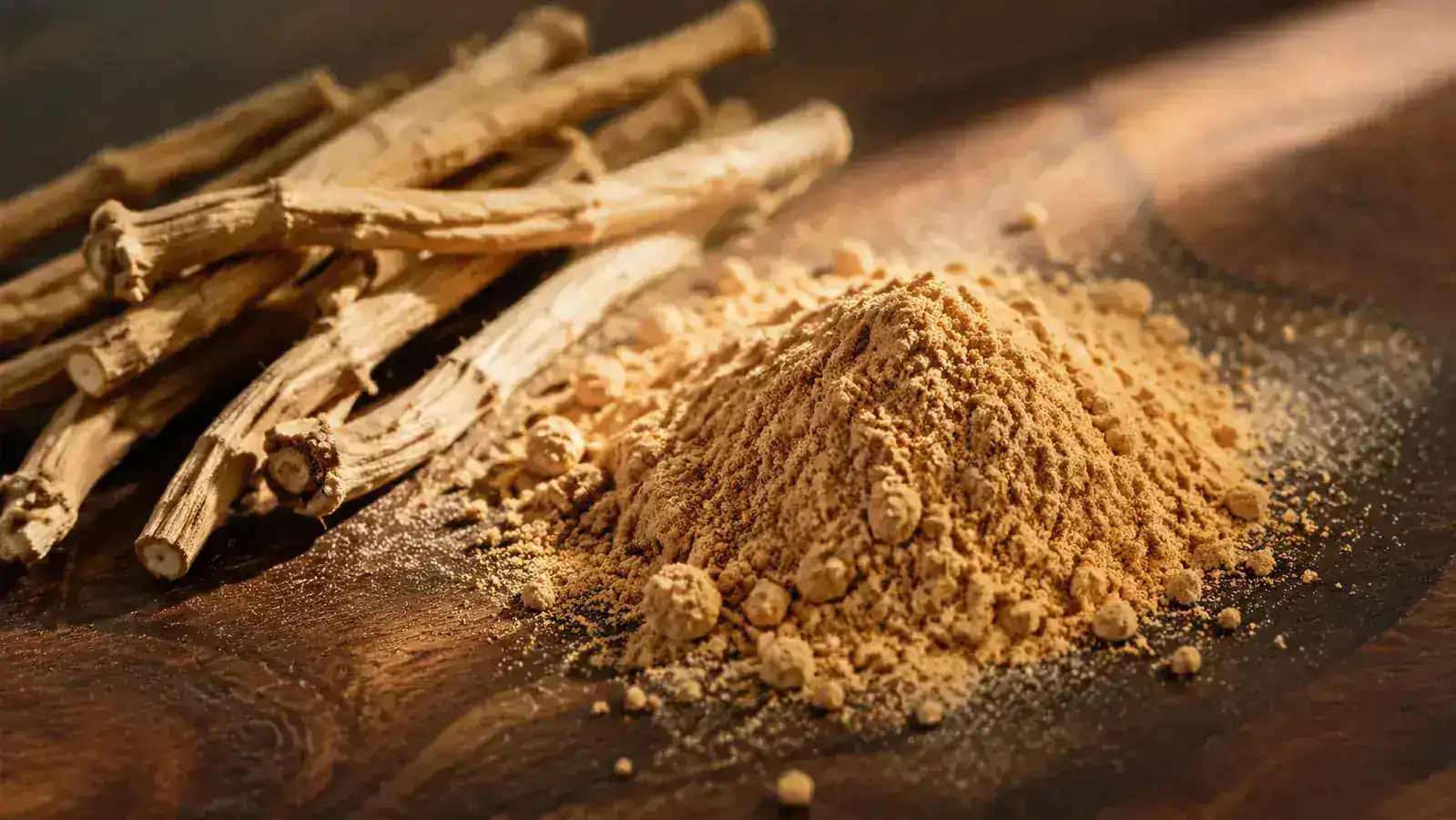
I have been watching people chase calm for a long time. Seventy years on these islands, and I have seen every kind of restlessness: the kind that keeps you up at 3 a.m., the kind that sits on your chest all day, the kind that makes your body feel like it is running a race nobody signed you up for. When I started reading about ashwagandha a few years back, I was not looking for a miracle. I was looking for something that might take the edge off the noise. What I found was a root with a very long track record and, in a good standardized extract, real results.
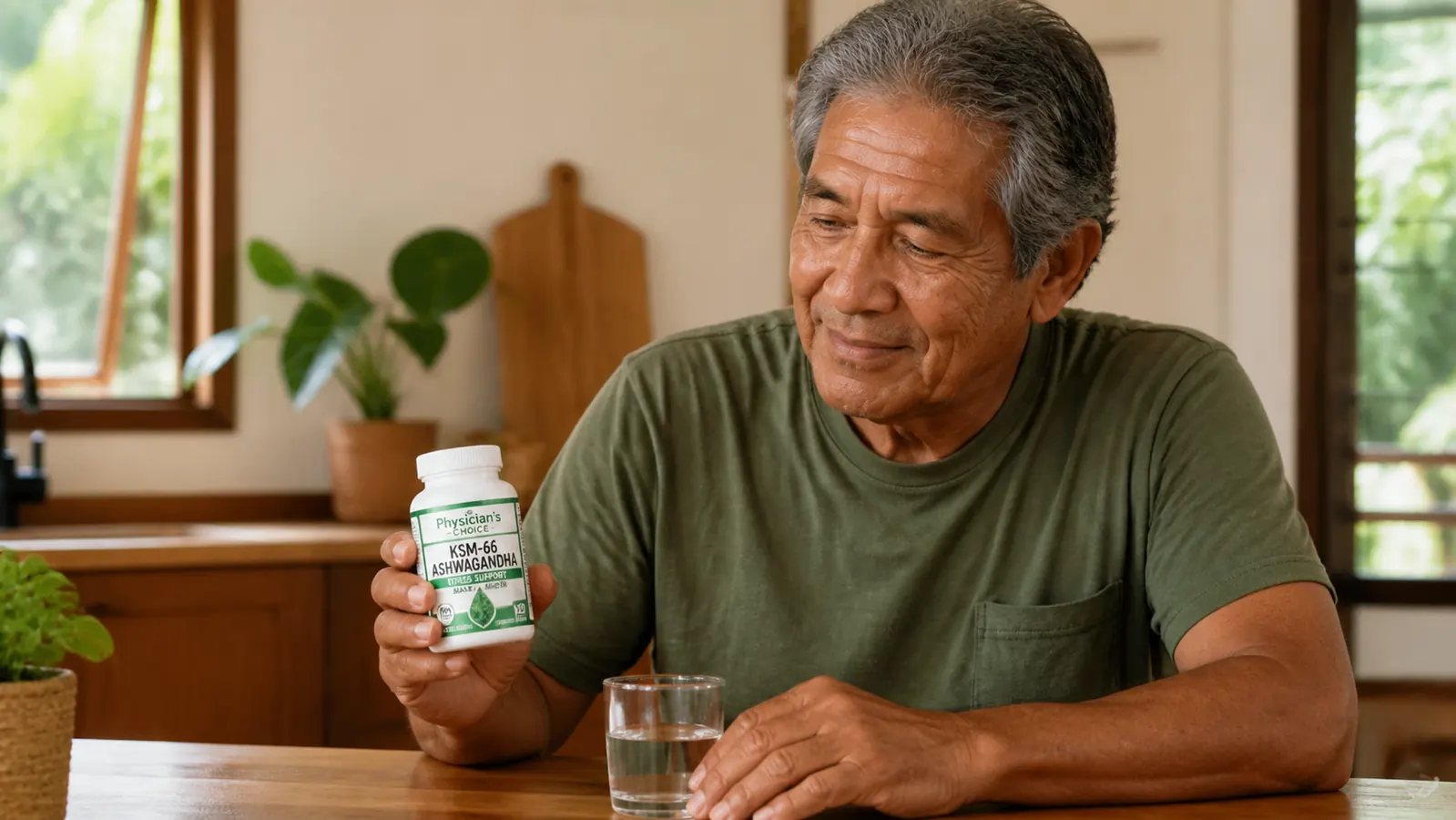
Physician's Choice KSM-66 Ashwagandha is the form I settled on. KSM-66 is a specific extract standardized to at least 5% withanolides, the active compounds in the root. That matters because a capsule of unverified ashwagandha powder is a different thing entirely. Below are ten reasons why I think this herb belongs in the conversation for anyone past sixty who is dealing with stress, poor sleep, or that general feeling of running on fumes.
Still wired at midnight? Ashwagandha may be the quietest thing you add to your routine.
Physician's Choice KSM-66 is standardized to 5% withanolides, the compounds most studied for cortisol and sleep support. Over 7,500 reviews. Rated 4.5 stars.
Amazon Check Today's Price on Amazon →It Works on Cortisol, Not Just on Symptoms
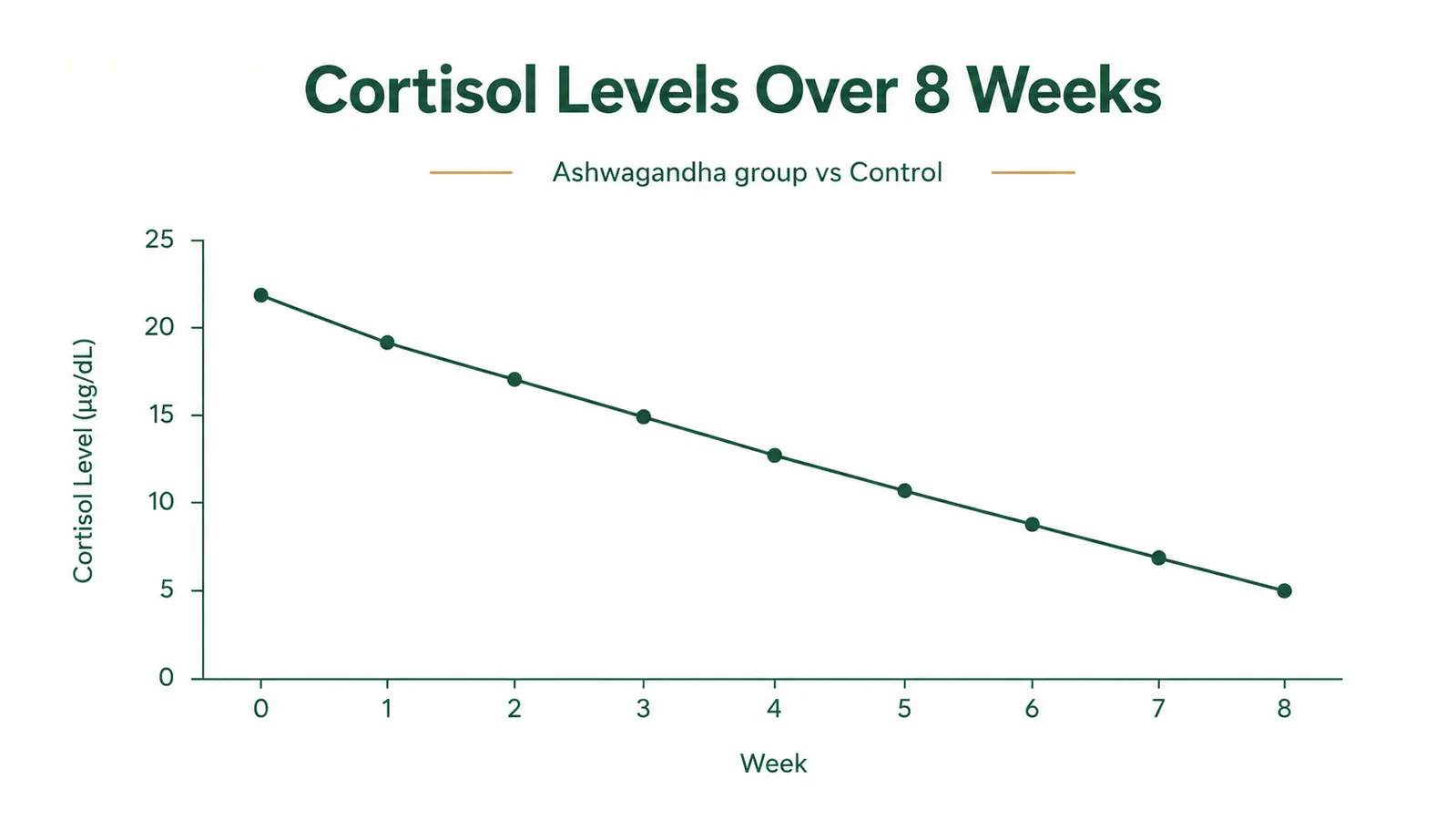
Cortisol is the body's main stress hormone, and after sixty it tends to stay elevated longer after stressful events. Ashwagandha has been studied for its ability to support healthy cortisol levels, not by sedating you, but by helping the adrenal system regulate itself. A 2019 study published in Medicine found that participants taking KSM-66 had measurably lower morning cortisol than the placebo group after eight weeks. That is the mechanism. Lower cortisol is why everything else on this list can follow.
It Supports Sleep Onset, Not Just Sleep Duration
Older adults often do not have trouble falling asleep so much as staying there. Ashwagandha, particularly a full-root extract, has been linked to improved sleep quality in adults with self-reported insomnia. In a 2020 trial, participants over 65 using a KSM-66 extract reported both faster sleep onset and fewer nighttime waking episodes compared to placebo. That is the difference between sedation and actual sleep architecture support.
It Is an Adaptogen, Not a Sedative
This distinction matters. Sedatives suppress your nervous system. Adaptogens help your body regulate itself under stress, then return to baseline. That is why ashwagandha does not make you feel groggy in the morning. It is not pushing you in one direction. It is helping your system find its own equilibrium. For anyone who has tried sleep aids and hated how they felt the next day, that is a meaningful difference.
It Has Three Thousand Years of Traditional Use Behind It
In Ayurvedic medicine, ashwagandha is called a rasayana, a class of herbs used to promote longevity and vitality. It has been in continuous use in India, parts of the Middle East, and North Africa for millennia. I have a deep respect for traditional plant knowledge. My own tradition, la'au lapa'au, is built on the same principle: the plant has been refined by generations of careful observation. That kind of track record does not happen by accident.
It May Help With the Fatigue That Stress Leaves Behind
Chronic low-grade stress is exhausting in a way that a night's sleep does not always fix. Ashwagandha has been studied specifically for stress-related fatigue, and several trials show improvements in self-reported energy levels alongside cortisol reductions. It is not a stimulant. It is more like removing a drag on the system that was costing you energy you did not know you were spending.
KSM-66 Is the Most Studied Extract Form
Not all ashwagandha supplements are alike. KSM-66 is a proprietary full-root extract with the largest body of clinical research behind it, including over 22 randomized controlled trials. The standardization to 5% withanolides means you know what you are getting. Generic ashwagandha powder capsules rarely disclose withanolide content at all. Physician's Choice uses KSM-66 at 1,000mg per two-capsule serving, which falls within the dosage range used in most of those studies.
It Includes Black Pepper for Better Absorption
Physician's Choice adds BioPerine, a black pepper extract, to the formula. Black pepper's active compound, piperine, has been shown to enhance the absorption of a range of botanical compounds. This is a small but meaningful detail. You can take the best extract in the world and still absorb very little of it. Including an absorption enhancer is a sign that the formulator thought past the label.

It May Support Healthy Thyroid Function
Some research suggests ashwagandha supports healthy thyroid hormone levels, particularly in people whose thyroid is sluggish due to stress. The connection makes sense: chronic cortisol elevation suppresses thyroid function over time. By helping regulate the stress response, ashwagandha may indirectly take some pressure off the thyroid. This is not a treatment for thyroid disease, and anyone with a thyroid condition should speak with their doctor first. But for general age-related thyroid slowdown, it is worth understanding the connection.
It Is Gentle on the Stomach When Taken With Food
Some supplements are hard on an aging digestive system. Ashwagandha, especially in capsule form, is generally well tolerated when taken with a meal. The most common complaint in trials is mild GI upset in the first week, which usually passes. I take mine with breakfast and have never had an issue. If you have a sensitive stomach, starting with one capsule instead of two for the first two weeks is a reasonable approach.
The Results Build Over Weeks, Not Days
This is one worth knowing up front. Ashwagandha is not a supplement you feel on day one. Most studies see meaningful effects at the four to eight week mark. That patience is consistent with how traditional plant medicine works. My tutu used to say that a plant grown slowly is stronger than one forced to grow fast. The same applies to what it does inside you. Give it six weeks before you decide it is or is not working.
What I Would Skip
Generic ashwagandha powder capsules with no extract standardization listed on the label. If it does not say KSM-66 or Sensoril, and it does not specify withanolide percentage, you are probably getting something closer to dried root flour than a therapeutic extract. The price difference between a quality extract and a cheap powder is not large enough to justify the uncertainty. The same goes for proprietary blends where ashwagandha is listed alongside a dozen other herbs with no individual doses disclosed.
My tutu had a saying: a plant that has been used for a thousand years has already passed every trial it needs to pass. The research just puts numbers to what the elders already knew.
Six weeks is what the research asks for. A bottle lasts thirty days. Two bottles gets you there.
Physician's Choice KSM-66 Ashwagandha 1,000mg per serving, organic certified, standardized to 5% withanolides, with black pepper for absorption. Rated 4.5 stars across 7,554 reviews.
Amazon Check Today's Price on Amazon →