

My memory started showing its age around 67. Not in a frightening way, not in a way I needed to call a doctor about right away. It was smaller than that. I would walk into the kitchen and stand there, briefly empty. I would reach for a neighbor's name and find only the shape of it. My wife Leilani called it 'the pause.' She had her own version of it. We joked about it at first, then less so. When I started researching lion's mane mushroom, I was not looking for a miracle. I was looking for something that might support what my mind was still trying to do. That is a different thing entirely.
Lion's mane has been used in traditional Chinese and Japanese medicine for centuries. It contains compounds called hericenones and erinacines that researchers believe may support the production of nerve growth factor. I will not tell you it cures anything, because it does not. What I can tell you is how to use it properly, what to look for in a quality extract, how long to give it before you expect anything, and what to pair it with if you want real support for the aging mind. This guide is practical. No hype.
If your mind is doing more work to find what used to come easily, lion's mane is worth a serious look.
Real Mushrooms Lion's Mane uses certified organic fruiting bodies, not mycelium on grain. It is one of the few products on the market that actually tests for beta-glucan content, which is the active compound you are paying for. With over 23,000 reviews and a 4.5-star rating, it has earned a place in a lot of serious wellness routines.
Amazon Check Today's Price on Amazon →Step 1: Choose an Extract Made From Fruiting Bodies, Not Mycelium
This step comes before you open any bottle. Most lion's mane supplements on the market are made from mycelium, which is the root-like structure of the mushroom grown on a grain substrate, usually oats or rice. The problem is that what you often get is mostly grain starch, not active mushroom compounds. The beta-glucans and the unique hericenone compounds concentrate in the fruiting body, which is the actual mushroom cap you would recognize in nature. A product that is not transparent about this is a product I would not trust.
Look for two things on any label before you buy. First, confirm it says 'fruiting body' or 'fruit body extract.' Second, look for a verified beta-glucan percentage. Real Mushrooms lists this clearly and tests each batch. When I switched to a fruiting-body extract after trying a cheaper mycelium product, the difference in how I felt over eight weeks was meaningful. I cannot prove causation, but I stopped second-guessing the sourcing after that.

Step 2: Start With Two Capsules in the Morning, With Food
The standard serving size for Real Mushrooms Lion's Mane is two capsules per day. I take mine in the morning with breakfast, not on an empty stomach. Some people prefer splitting the dose, one with breakfast and one midday. I tried that for a few weeks but found the morning-with-food approach easier to stick to, and consistency matters more than any particular timing window.
A few things help absorption. Taking it with a small amount of fat, such as eggs, avocado, or a spoonful of coconut oil, may help fat-soluble compounds absorb more readily. Do not chase it with a large amount of caffeine right away. Coffee is fine, but if you drink three cups before nine in the morning, you will not be able to separate what lion's mane is doing from what the caffeine is doing. Give yourself a clean baseline in the first few weeks.
Do not try to accelerate results by taking more than the label recommends. Lion's mane is not the kind of supplement where more equals faster. The active compounds work gradually and cumulatively. What I tell people who ask me about this: treat it like you would a slow-brewed cup of tea. Patience is part of the practice.
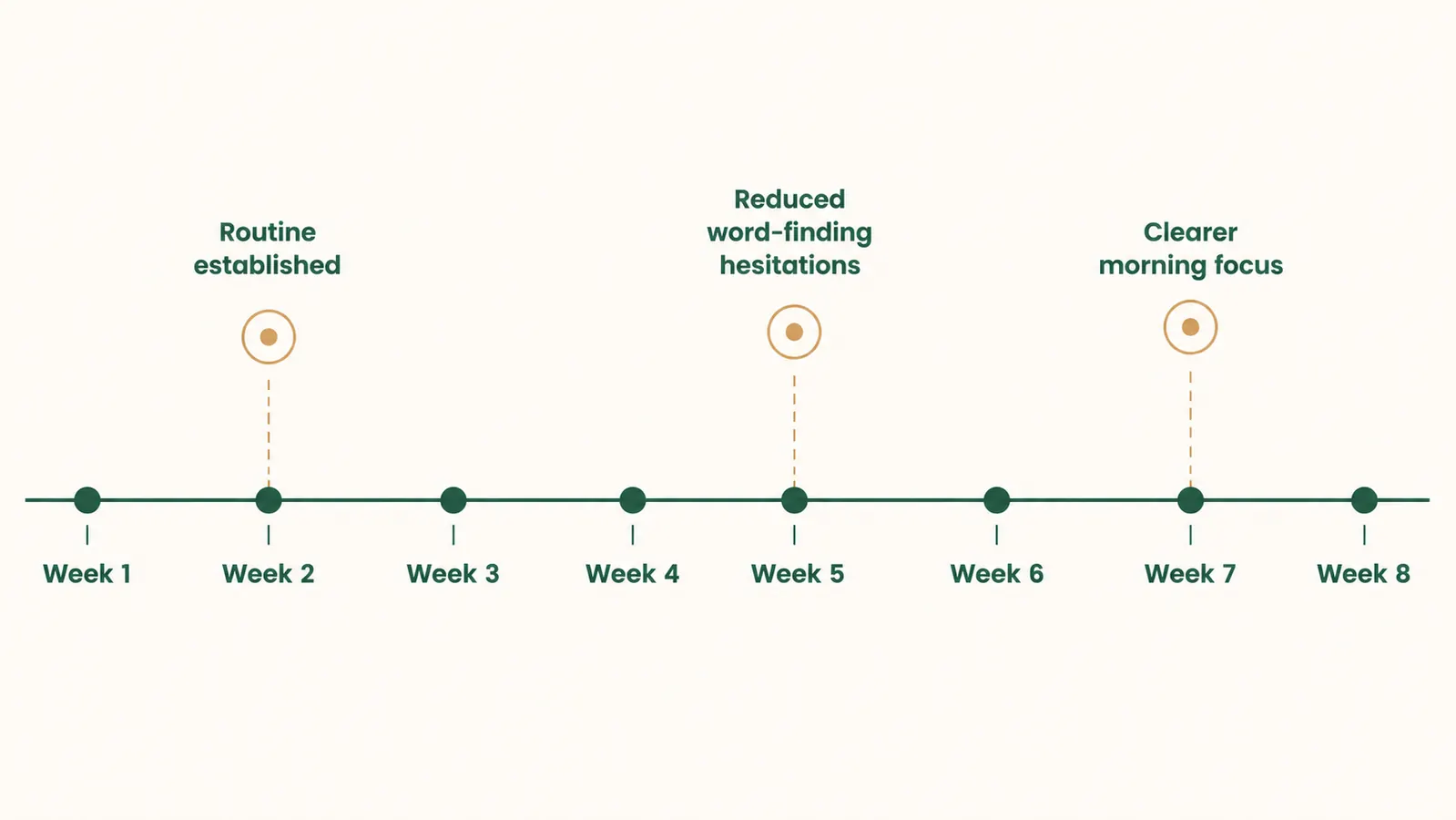
Step 3: Give It Eight Weeks Before You Decide Anything
Most people quit lion's mane after two weeks because they do not feel a dramatic shift. I understand that impulse. We live in a world that rewards instant feedback. But cognitive support supplements do not work that way, and lion's mane in particular works through gradual neurological pathways that take time to build on. Studies looking at cognitive outcomes in older adults have generally used eight to twelve weeks as the minimum observation window.
I kept a small notebook on my nightstand during my first few months. Not a formal journal, just a few words each evening. 'Good focus today.' 'Slower morning.' 'Remembered the story I wanted to tell at dinner.' Small notes like that gave me a more honest picture than trying to assess by feel at the end of eight weeks. I recommend this to anyone starting lion's mane. The changes are often subtle enough that you will forget them unless you have written them down.
The mind does not need to be fixed. It needs to be supported. Lion's mane, at its best, is less like a switch and more like steady water finding its level over time.

Step 4: Consider a Cycling Pattern After Three Months
There is no firm research consensus on whether lion's mane should be cycled. Some practitioners recommend taking it five days on and two days off, or six weeks on followed by two weeks off. The idea is to prevent the body from adapting to a consistent dose and potentially diminishing its response. I personally take weekends off after my first ninety days. Others take it daily year-round without issue. This is a place where you listen to your own body and consult your doctor if you have any concerns.
What I would caution against is stopping abruptly because you feel like it is 'not working' after six or eight weeks and then restarting a month later. That inconsistency will make it nearly impossible to evaluate honestly. Commit to a full cycle before changing anything. And if you do pause, keep the notebook going so you can notice whether anything shifts during the break.
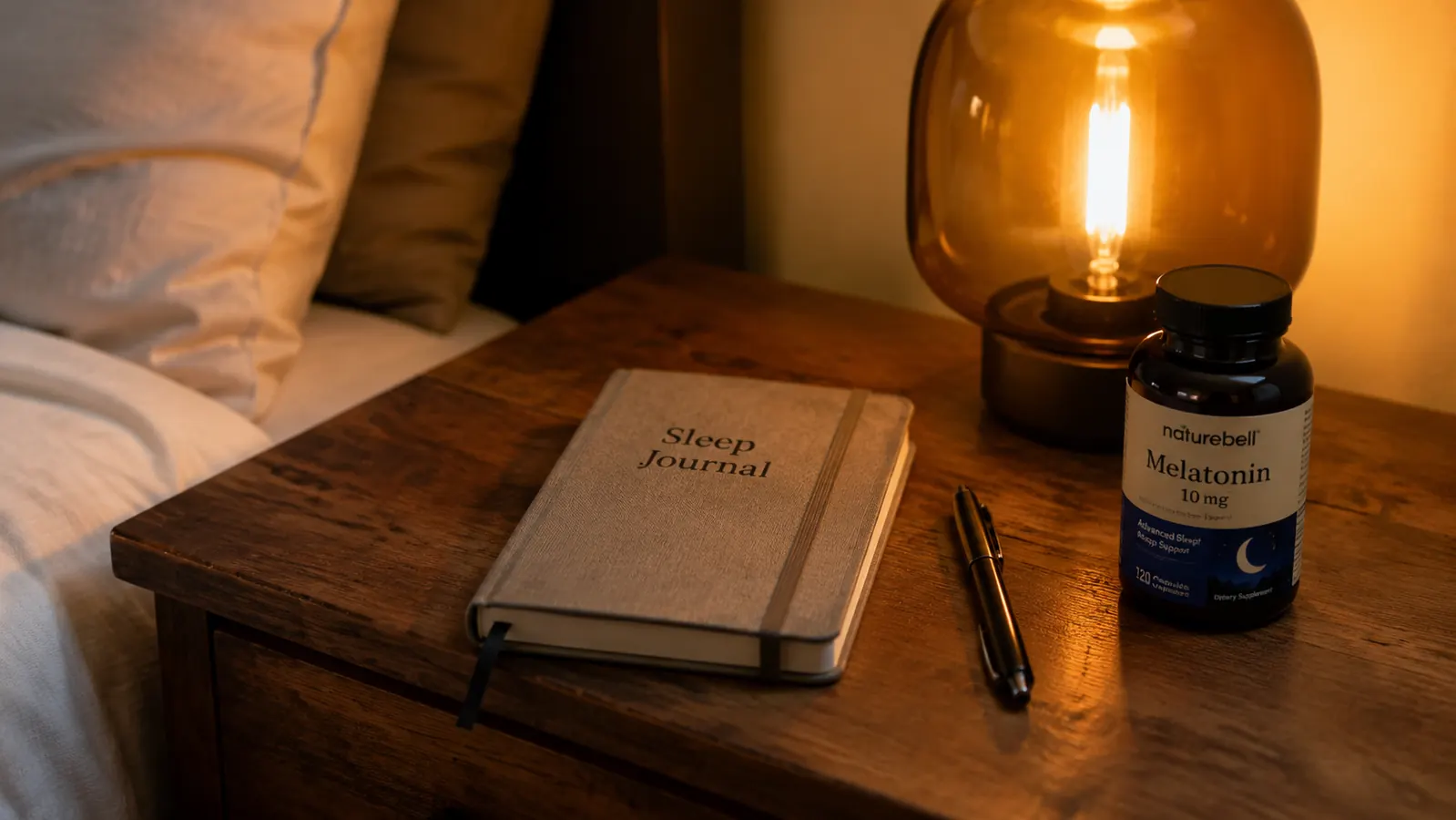
Step 5: Build the Whole Routine, Not Just the Capsule
Here is the honest part that most supplement guides skip over. Lion's mane will not do much for your memory if you are sleeping five hours a night, eating mostly processed food, and sitting in a chair all day without a single conversation that asks your mind to work. Supplements support a healthy body and brain. They are not a substitute for the conditions that allow the brain to actually function.
Sleep is not optional when it comes to cognitive health. During deep sleep the brain clears metabolic waste through what researchers call the glymphatic system. If that clearance is disrupted night after night, no mushroom on earth will make up the difference. I shoot for seven hours. I am in bed by nine-thirty most nights, which my grandchildren find amusing. It is not glamorous. It works.
Daily walks are the second piece. Twenty to thirty minutes, outside if you can. Not on a treadmill staring at a phone, but actually outside where your eyes and ears are taking in a changing environment. This kind of movement supports circulation, mood, and the kind of low-grade mental engagement that keeps the brain active without overloading it. I walk the same neighborhood path I have walked for thirty years. I still notice new things on it.
The third piece is social engagement. Conversation that requires you to listen carefully, remember what someone said, and respond thoughtfully is one of the most demanding and protective things you can ask of your aging mind. Isolation is genuinely harmful for cognition over time. Whether that means family dinners, a weekly card game, or volunteering somewhere that puts you around people, make it a priority. No capsule replaces the workout of a real conversation.
What Else Helps
If you are looking at other supplements to pair with lion's mane, the ones I would consider first are omega-3 fatty acids, particularly from fish oil or algae, which have good research behind them for brain health. Some people also add bacopa monnieri, an Ayurvedic herb with its own body of cognitive support research. I would not stack more than one new supplement at a time, though. Add lion's mane first. Give it eight weeks. Evaluate. Then decide whether to add anything else. Stacking too many things at once makes it impossible to know what is actually helping.
Ashwagandha is worth mentioning alongside lion's mane for older adults managing both cognitive changes and stress. Chronic stress elevates cortisol, which over time can be hard on the hippocampus, the part of the brain most associated with memory. Reducing that stress load is part of protecting cognitive health long-term. The two supplements do not conflict, but again, I would introduce them separately so you can evaluate each one honestly. See our detailed review of Real Mushrooms Lion's Mane for a deeper look at what six months of daily use actually produced.
A clear mind starts with the right foundation. Real Mushrooms Lion's Mane is one of the few products I trust enough to take myself.
If you have read this far, you are taking your cognitive health seriously. Real Mushrooms Lion's Mane is the product I recommend to anyone asking where to start. Organic fruiting bodies, verified beta-glucan content, and more than 23,000 honest reviews on Amazon. Check today's price and see if the 300-count bottle makes sense for your eight-week commitment.
Amazon Check Today's Price on Amazon →