
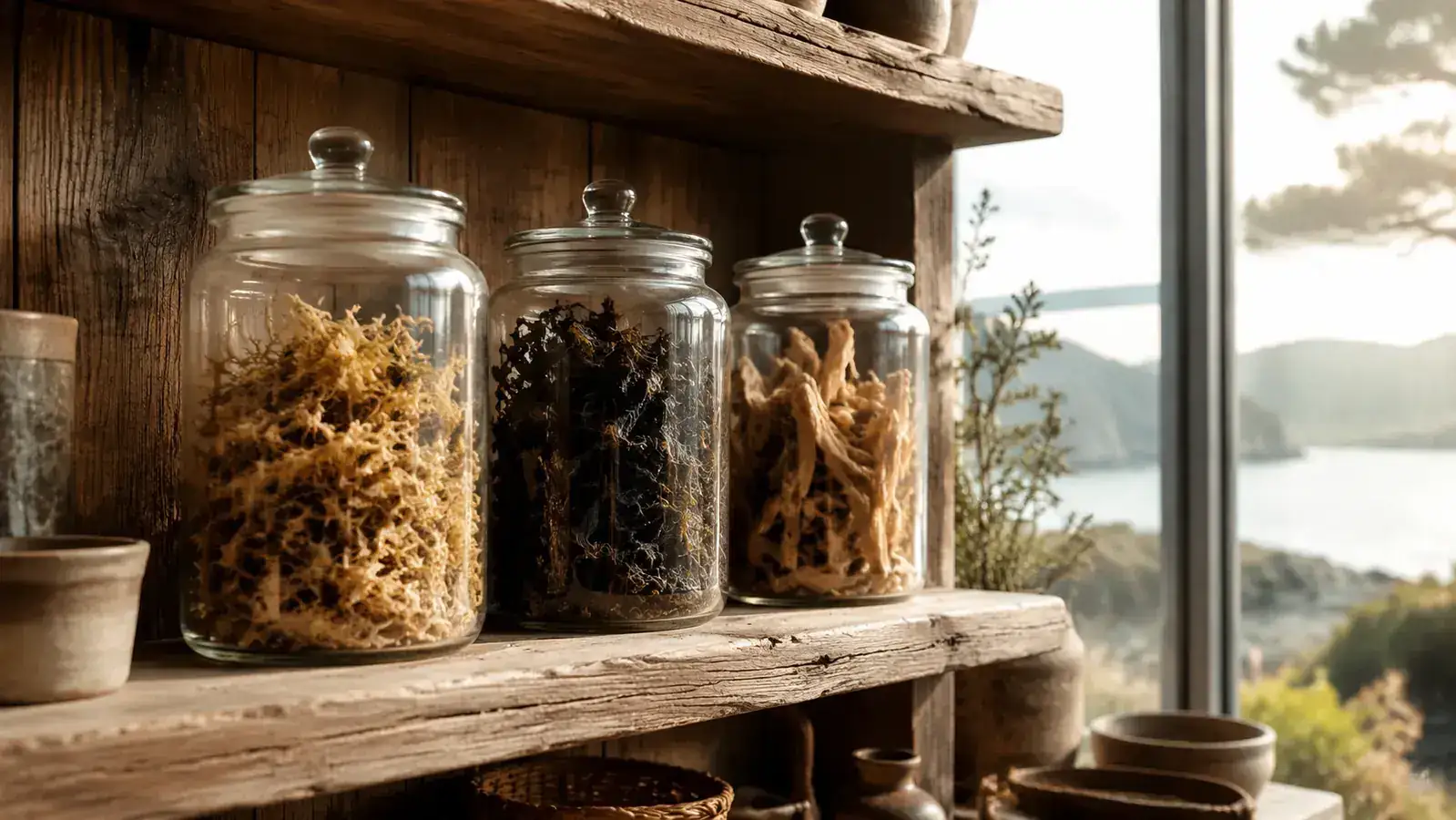
When I was younger, the gut was not something we talked about much. You ate what the land and sea provided, your body did its work, and you moved on. But at 70, after a lifetime of watching people reach for one remedy or another for bloating, constipation, sluggishness, and all the quiet discomforts that gather with age, I have come to believe that what the gut needs most is not a dramatic intervention. It needs steady, gentle nourishment, the kind that comes from real food and the plants that have been part of ocean-based diets for generations.
Sea moss, which Hawaiians have long called limu, is one of those plants. Its mucilaginous fiber coats and soothes the digestive tract. It feeds the beneficial bacteria in your gut. Bladderwrack adds iodine and more prebiotic fiber. Burdock root has been used across Pacific and Asian traditions to support the liver and move waste through the bowel. Together, these three are not a miracle. They are a foundation, and foundations are built slowly. This guide walks you through exactly how I have worked Nutrivein Organic Sea Moss capsules into my daily routine, and what you can reasonably expect if you do the same. If you have a diagnosed gastrointestinal condition, please speak with your doctor before adding anything new, including this.
Still bloated and unsure why? Sea moss prebiotic fiber might be the gap in your gut routine.
Nutrivein Organic Sea Moss 1600mg combines sea moss with bladderwrack and burdock root for a complete digestive support formula. Over 9,300 reviews and a 4.5-star rating on Amazon.
Amazon Check Today's Price on Amazon →Step 1: Understand What You Are Actually Taking
Before you add anything to your routine, it is worth knowing what is in the capsule and why each ingredient earns its place. Nutrivein's formula combines three botanicals: organic sea moss (Chondrus crispus), bladderwrack (Fucus vesiculosus), and burdock root (Arctium lappa). Each has a distinct role in digestive support, and they work better together than any one alone.
Sea moss is primarily a source of soluble fiber, specifically a gel-forming mucilage called carrageenan. In traditional diets, people actually ate the whole plant, and that gel would coat the lining of the esophagus, stomach, and intestinal tract, providing a soothing, lubricated passage for food. In capsule form you lose some of that tactile effect, but the prebiotic fiber still reaches your colon where it becomes food for Bifidobacterium and Lactobacillus strains, the beneficial bacteria that help regulate bowel movements, reduce gas, and crowd out less friendly organisms. Bladderwrack contributes alginic acid, another soluble fiber with mild bulking properties. Burdock root is traditionally used as a gentle bitter, which in herbalism means it supports digestive enzyme production and bile flow. This matters because sluggish bile is often behind the heavy, stuck feeling many older adults experience after eating fat-containing foods.
You do not need to memorize all of this. The short version is: sea moss and bladderwrack feed your gut bacteria and keep things moving gently, while burdock root helps your liver and gallbladder do their part. That combination, taken consistently, is what makes the difference over time.
Step 2: Set a Realistic Timeline Before You Start
One of the most common mistakes I see is people trying something for five days, noticing nothing obvious, and concluding it does not work. The gut microbiome does not reorganize itself in a week. Scientific literature on prebiotic fiber supplementation consistently shows that meaningful shifts in microbiome composition begin around the three-week mark, with more stable improvements by six to eight weeks of consistent daily use.
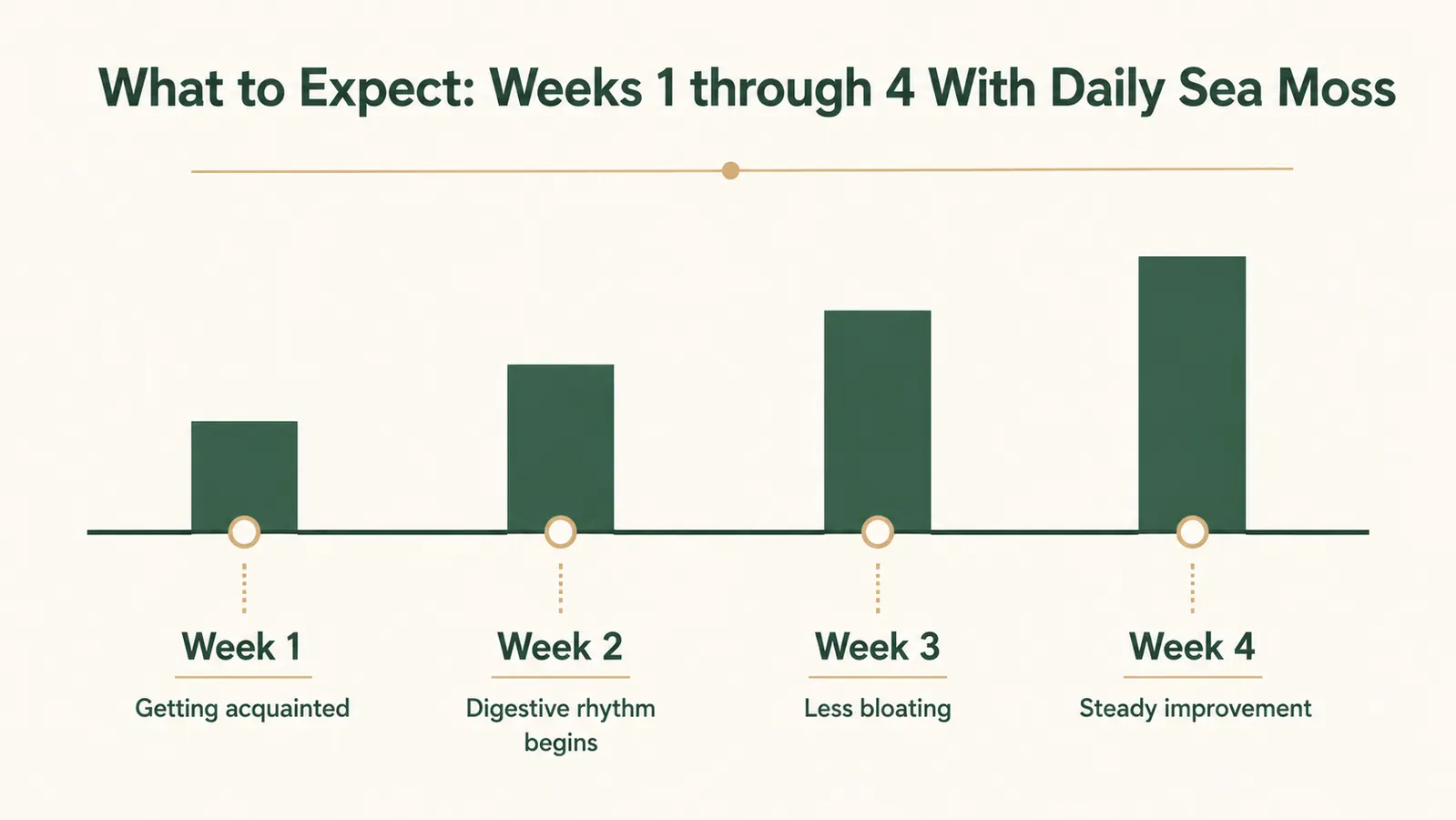
Here is a rough map of what you might notice at each stage, based on my own experience and the pattern in the reviews from other long-term users. In the first week, some people notice a very mild increase in gas as their gut bacteria begin adjusting to the new fiber source. This is normal and typically settles. By week two, bowel movements often become more regular and easier to pass, which is usually the first sign the prebiotic fiber is doing its job. Around weeks three and four, the bloating that many people carry through the afternoon, that heavy, inflated feeling, tends to soften. By the six-week mark, if you have been consistent, the changes feel less like a supplement effect and more like your digestive system running the way it is supposed to.
Step 3: Get Your Timing and Dosage Right
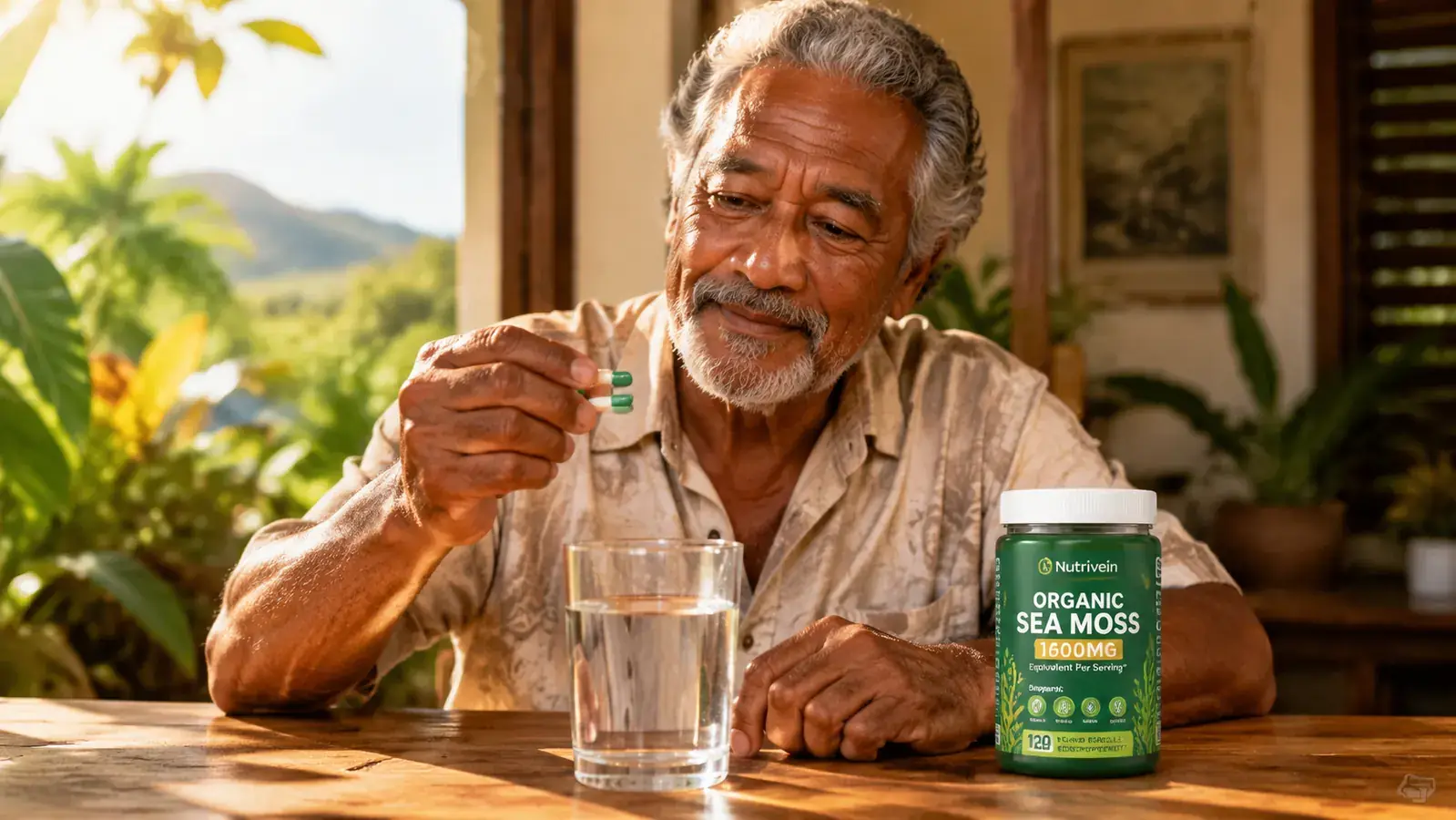
Nutrivein recommends two capsules daily, which delivers 1600mg of the combined sea moss, bladderwrack, and burdock complex. I take mine first thing in the morning, about ten minutes before I eat anything, with a full twelve-ounce glass of water. The reason for the water is not just a formality. The soluble fiber in sea moss expands slightly as it absorbs liquid, and without adequate hydration you reduce its ability to form that gentle gel in your digestive tract. Some people prefer splitting the dose, one capsule in the morning and one with dinner. Either approach works. What matters most is consistency, meaning roughly the same time each day, every day.
I do not recommend taking sea moss capsules on an empty stomach if your stomach tends to run acidic or if you have a history of acid reflux. In that case, take them with your first meal. The fiber will still be absorbed and fermented in your colon regardless. Also, if you are on blood thinners or thyroid medication, check with your doctor before adding any seaweed-based supplement. Bladderwrack contains iodine, and iodine interacts with thyroid function. For most healthy adults, the amount in two capsules is within a safe daily range, but if your thyroid is already medically managed, that conversation belongs with your physician.
Step 4: Pair It With Habits That Let It Work
A capsule can support a healthy gut. It cannot compensate for habits that work against one. In my experience, the people who see the most consistent improvement from sea moss are the ones who also make a few quieter changes alongside it. None of these are dramatic. They are the kind of thing your grandmother would have told you anyway.
First, water. Prebiotic fiber needs water to do its job. If you are taking sea moss and drinking less than six cups of fluid a day, you may find yourself more constipated, not less. I aim for eight cups. Second, the first meal of the day matters more than most people realize. A breakfast that includes some fruit or cooked vegetable, rather than just toast or a pastry, gives your gut bacteria more diverse substrate to work with alongside the sea moss fiber. Third, try to eat your largest meal at midday rather than in the evening. Your digestive system is most active during daylight hours, and eating a heavy dinner asks it to work when it is naturally winding down. This is old wisdom in Hawaiian culture, and I have found it holds up.
The ocean has been feeding the gut of Pacific peoples for ten thousand years. Sea moss is not a trend. It is a return.
Step 5: Know the Signs That It Is Working
Because gut health improvements are quiet, many people miss them. They are not looking for a dramatic event, so they do not notice the absence of one. Here is what to watch for. A bowel movement that is easier to pass and better formed is the clearest early signal. If you were going every two or three days before, moving toward once daily is a meaningful improvement. If you were already going daily but straining, softer stools with less effort is the sign. The afternoon bloating I mentioned, that tight, gassy feeling that arrives a couple of hours after lunch, often diminishes gradually. You may not notice it is gone until someone asks why you look more comfortable.
Energy is a subtler sign, and one I was not expecting when I started. Constipation and poor microbiome diversity are linked to fatigue through mechanisms researchers are still mapping, but the practical experience is that when your gut starts processing food more efficiently, afternoons feel less heavy. I started noticing this around week four. It is not stimulant energy. It is just the absence of a low-grade drag that had been so constant I had stopped noticing it.

What Else Helps
Sea moss does not replace everything else. For broader digestive support, I often mention a few things alongside it. A tablespoon of apple cider vinegar diluted in water before a protein-heavy meal can support stomach acid production, which declines with age and is often the real culprit behind that heavy, undigested feeling. A daily walk of even twenty minutes after your main meal significantly improves gastric motility, the speed at which food moves through your digestive system. And if you have been relying on a probiotic supplement without a prebiotic fiber source, consider that the bacteria in that probiotic need something to eat when they arrive in your colon. Sea moss provides exactly that substrate. The two work well together, and I take mine on the same morning schedule.
If you want to read more about how sea moss compares to other ocean-based supplements before deciding, my piece on sea moss versus spirulina covers the nutritional differences in plain language. And if you want the full picture of what three months of consistent Nutrivein use looked like for me personally, the three-month review has all of that detail.
A Note for Anyone With Serious Digestive Conditions
Everything in this guide is written for people with normal, age-related digestive sluggishness, the kind that comes from decades of life, less movement than we used to get, and a modern diet that does not always give the gut what it needs. If you have Crohn's disease, ulcerative colitis, irritable bowel syndrome with significant symptoms, celiac disease, or any other diagnosed gastrointestinal condition, please talk to your doctor or a registered dietitian before adding sea moss or any new supplement to your routine. Prebiotic fiber can be genuinely helpful for some of these conditions and counterproductive for others, depending on the specifics of your situation. A good clinician who knows your history will give you better guidance than any article can.
Ready to give your gut the steady, daily support it has been missing?
Nutrivein Organic Sea Moss 1600mg with Bladderwrack and Burdock Root is the formula I use myself, every morning. It is priced reasonably, ships fast, and the reviews from people who have used it consistently for months are what convinced me to try it in the first place.
Amazon Check Today's Price on Amazon →