
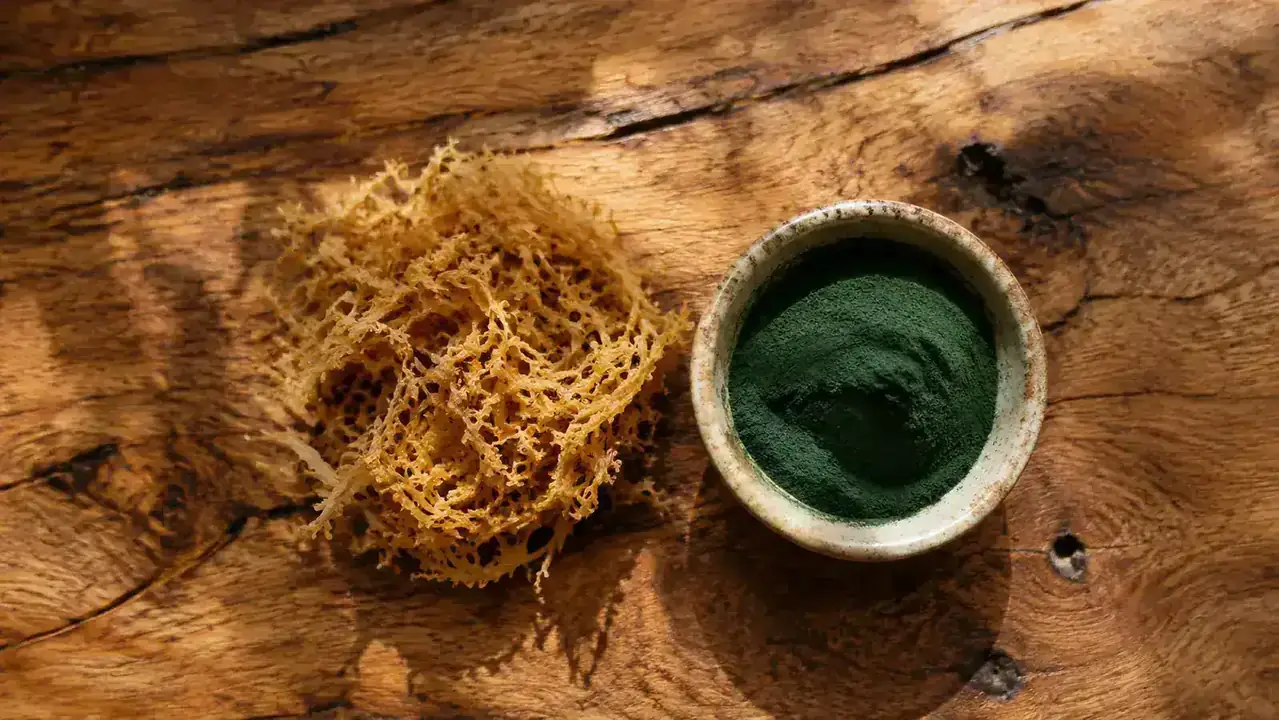
People ask me which one they should take, and I understand the confusion. Sea moss and spirulina both have that "from the ocean" identity. Health stores stack them on the same shelf. Social media treats them like cousins. But when I look at what each plant actually does, and where it comes from, and what my tradition says about it, they are not the same thing at all. One is a seaweed that has grown along volcanic coastlines for thousands of years. The other is a freshwater microalgae cultivated in ponds, mostly in warm inland regions. Both have real merit. Neither is better in every situation. What matters is which one fits what your body actually needs right now.
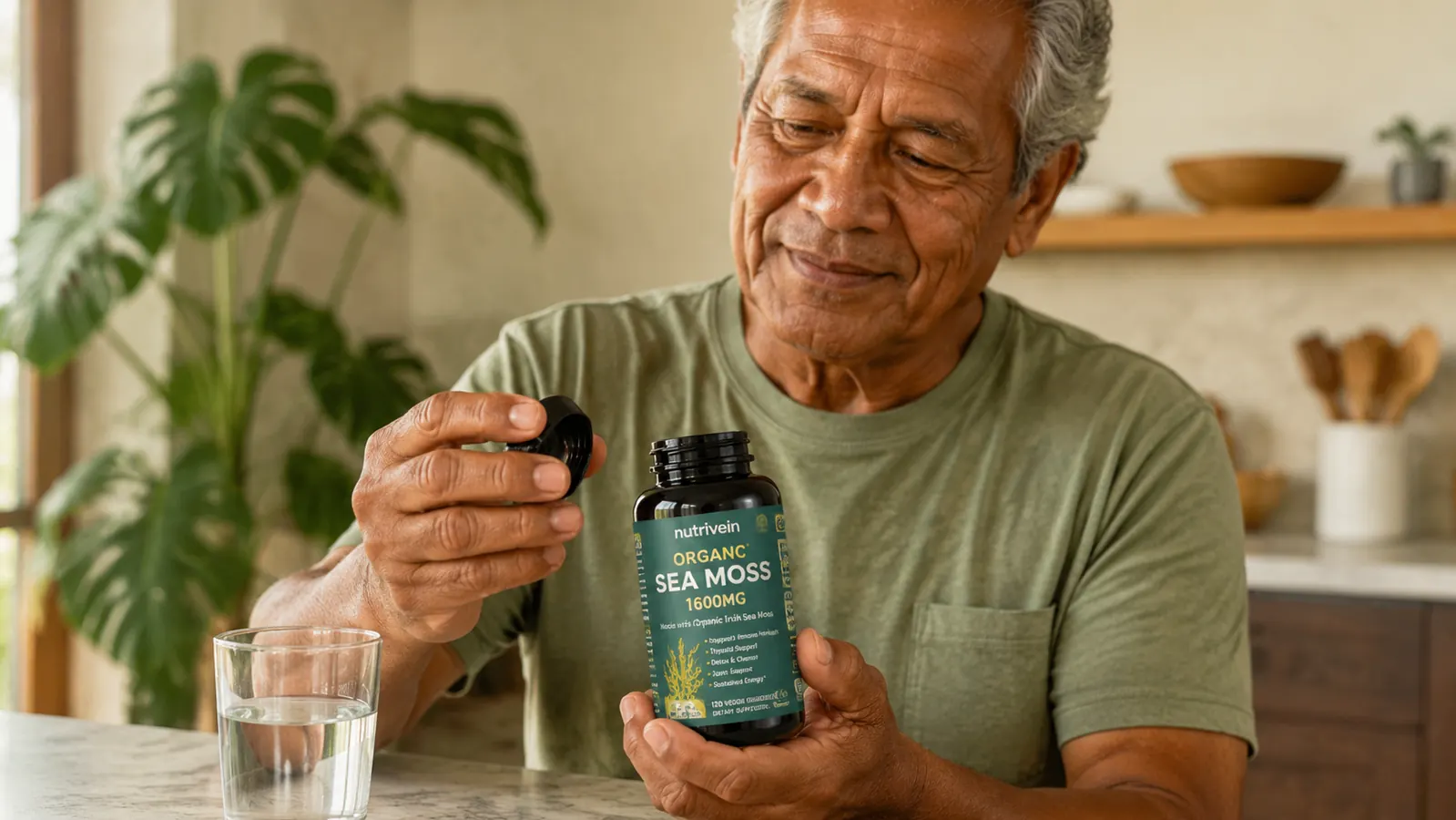
I have been taking Nutrivein Organic Sea Moss capsules for several months now, and I want to be straight with you about why sea moss earned my preference in this comparison. It is not because spirulina is bad. It is because sea moss lines up with something deeper for me, and I think that same reasoning will resonate with many of you who are looking for whole-body mineral support and gut health, not just a protein boost.
| Source | Atlantic Ocean / seaweed | Freshwater ponds (microalgae) |
| Mineral diversity | Up to 92 trace minerals reported | Strong in iron, B12 analogs, protein |
| Iodine content | High (thyroid-relevant) | Low to negligible |
| Fiber / prebiotic benefit | Yes, carrageenan acts as soluble fiber | Minimal |
| Protein per serving | Low | High (60-70% protein by weight) |
| Gut / digestive support | Primary strength | Secondary benefit |
| Traditional use | Pacific, Caribbean, Irish coastal healing | Ancient Aztec, African lake harvest |
| Form available | 1600mg capsule with bladderwrack and burdock root | Powder, tablets, loose capsules |
| Convenience | Capsule, no preparation | Powder requires mixing; strong taste |
| Amazon link | Yes (Nutrivein) | No affiliate link for this comparison |
| Price range | See today's price on Amazon | Widely variable |
| Winner | Sea Moss (Nutrivein) |
Where Sea Moss Wins
The first thing I tell people about sea moss is the mineral story. Growing up here on the islands, we did not think about trace minerals as a category of nutrition. We thought about limu, the seaweed my elders harvested along the reef. What they understood intuitively, and what research now confirms, is that ocean plants absorb the mineral density of the water around them. Seaweed that grows along a rocky Atlantic coastline carries iodine, potassium, calcium, magnesium, iron, zinc, selenium, and dozens of trace elements that most aging adults are quietly deficient in. Spirulina, for all its protein richness, cannot match that mineral breadth because freshwater ponds do not contain the same mineral complexity as the open ocean.
The second area where sea moss pulls ahead is digestive support. The natural carrageenan in sea moss acts as a soluble prebiotic fiber. It feeds the beneficial bacteria in your gut and helps maintain the mucosal lining of the digestive tract. Nutrivein's formula pairs sea moss with bladderwrack and burdock root, which adds another layer of gut-supportive fiber and compounds that have been used in traditional herbalism for centuries. If your main concern is bloating, irregular digestion, or the kind of sluggish gut that becomes more common after 60, sea moss is the more targeted choice. Spirulina will not hurt you in that department, but it was not designed for it either. The third area is thyroid support. The iodine in sea moss is meaningful. Many adults, especially those who have moved away from iodized salt or seafood-heavy diets, are getting less iodine than their thyroid needs to function well. Spirulina contains almost none.
Where Spirulina Wins
I want to be honest here, because spirulina has earned real respect. It is one of the most protein-dense foods on earth, gram for gram. For people who are plant-based, or who struggle to get enough complete protein from food, spirulina is a serious option. It contains all essential amino acids, and its iron content is unusually high for a plant source. Some studies have shown it may help reduce LDL cholesterol and support cardiovascular health. Those are not small things.
Spirulina also has a longer record of clinical research than sea moss does. Scientists have been studying spirulina in controlled trials since the 1970s. Sea moss is still catching up in that regard, with most of its reputation resting on generations of traditional use rather than double-blind studies. If you are the type of person who will not take a supplement unless there are multiple published studies behind it, spirulina has more of that documentation. I respect that. I simply do not think it disqualifies sea moss, any more than the lack of clinical trials for my grandmother's garden meant she was wrong about her plants.
Your thyroid, gut, and mineral levels do not care which supplement is trending. They care which one feeds them.
Nutrivein Organic Sea Moss 1600mg includes bladderwrack and burdock root in a single capsule. Over 9,000 reviews on Amazon. No preparation, no mixing, no taste.
Amazon Check Today's Price on Amazon →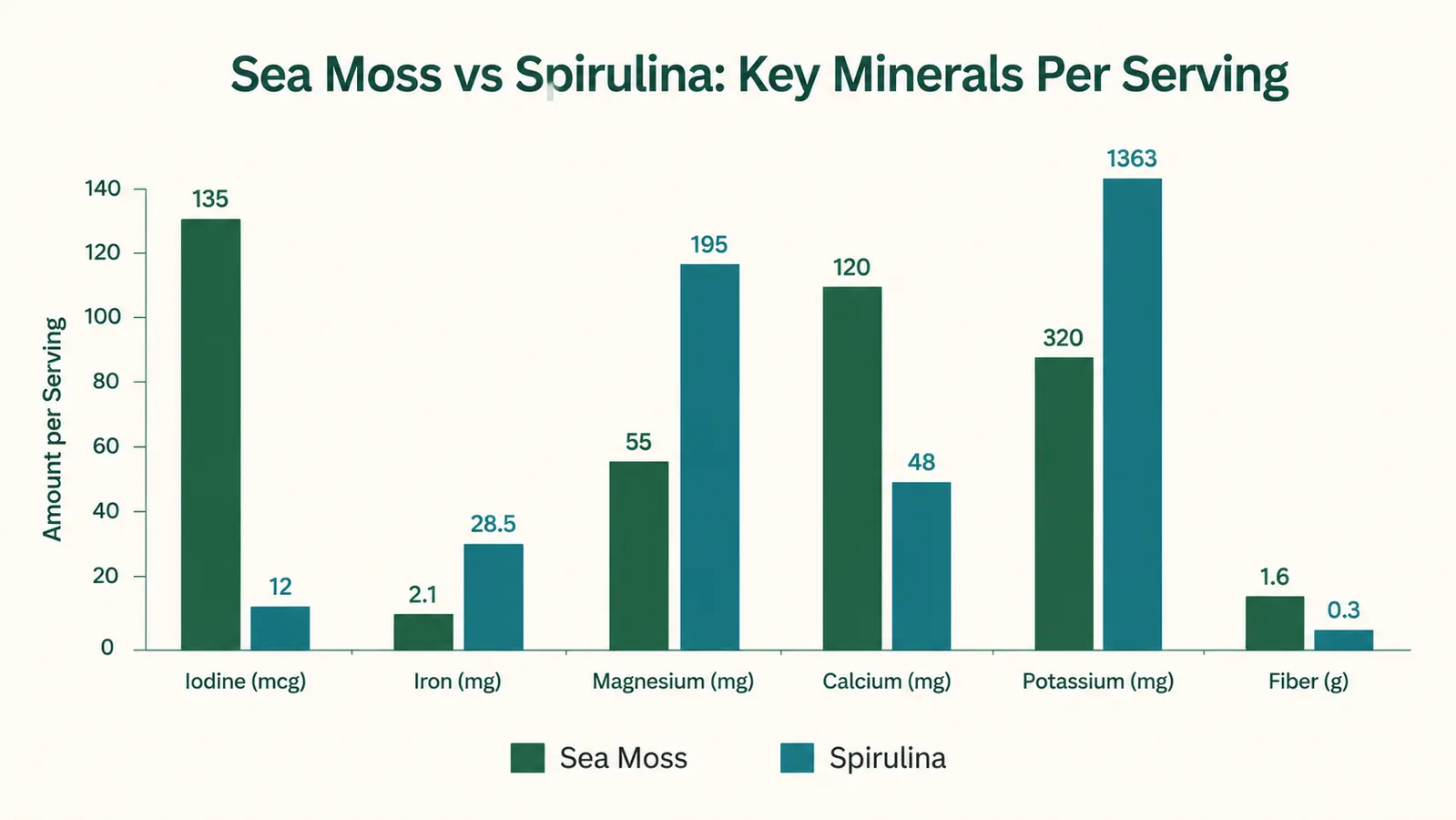
The Source Question: Why Ocean vs Pond Matters to Me
I realize this section is personal, and you may weigh it differently. But I think the sourcing distinction between sea moss and spirulina matters beyond just minerals. Sea moss is a macroalgae, a true seaweed, harvested or cultivated in moving ocean water exposed to sun, tide, and the full mineral spectrum of the sea. The best quality sea moss comes from coastal regions where the water is clean and the plant grows slowly. Nutrivein uses organic sea moss, which means there is some attention to where and how it was grown.
Spirulina, on the other hand, is a single-celled cyanobacterium grown in controlled freshwater ponds, often in large commercial operations in places like Hawaii, California, China, or India. The quality of spirulina varies significantly by producer. Because it is a single-celled organism with no cell wall, it absorbs whatever is in the water around it, including heavy metals if the pond is not well managed. This does not mean spirulina is unsafe, but it does mean sourcing and third-party testing matter a great deal with spirulina in a way that is harder for a casual buyer to verify. With a capsule supplement like Nutrivein, the label transparency and broad customer review base give me more confidence than most bulk spirulina powders on the market.
My elders harvested limu from the reef without thinking about mineral panels or thyroid function. They just knew the sea kept them well. What I find in sea moss capsules is that same wisdom made convenient for the life I actually live now.
The Tradition Angle
Sea moss carries a long tradition of use across Pacific Island cultures, the Caribbean, and the Irish coast. In Hawaii, limu, the broad category of seaweeds and ocean plants, has been eaten, used medicinally, and respected as a living gift from the ocean for as long as people have been on these islands. The specific Irish moss variety in most sea moss supplements shares that coastal lineage. Caribbean folk medicine has used sea moss for respiratory health, vitality, and digestive support for generations. That kind of consistent, cross-cultural traditional use across isolated populations carries weight for me.
Spirulina also has traditional roots, particularly among the Aztec people who harvested it from Lake Texcoco, and among communities along Lake Chad in Africa. That history is real and deserves recognition. But the breadth of Pacific and Atlantic coastal tradition behind sea moss, and its particular resonance with where I come from, is part of why it sits at the center of my daily routine rather than the edges.

Who Should Buy Sea Moss
Sea moss is the better pick if your main goals are gut health, thyroid support, mineral repletion, or skin and joint support from the inside out. It is also the right choice if you want a capsule you can take with water and forget about, rather than a powder you have to measure, mix, and tolerate the taste of. Adults over 55 who are noticing slower digestion, low energy that does not quite explain itself, or dry skin despite drinking enough water may find that the trace mineral density in sea moss addresses what they have been missing. Nutrivein's formula, which adds bladderwrack and burdock root, broadens those benefits without requiring you to take three separate supplements.
Who Should Consider Spirulina Instead
If your primary need is protein, particularly if you are plant-based and struggling to meet your daily protein needs, spirulina deserves a serious look. It is also a reasonable choice for people who have strong research requirements before supplementing, given the longer clinical literature behind it. Athletes looking for an iron boost without meat, or people managing cholesterol through diet and supplementation, may find spirulina more precisely targeted to their situation. It is also worth mentioning that you do not have to choose. Some people take both, sea moss for minerals and gut support, and spirulina for protein and iron. They do not compete. They address different gaps.
If you have been low on energy and cannot quite explain why, start with what the ocean has been offering for centuries.
Nutrivein Organic Sea Moss 1600mg with Bladderwrack and Burdock Root. 120 capsules. 4.5 stars from over 9,000 Amazon customers. A capsule a day is simpler than you think.
Amazon Check Today's Price on Amazon →