

My knees used to be the first thing that reminded me I was 70. Every morning, I would swing my legs over the side of the bed and just sit there for a minute, waiting for my joints to agree that the day was starting. Some mornings it took five minutes. Some mornings, on the days after a long walk or an afternoon pulling weeds in the garden, it took longer. My doctor called it normal wear. My tutu would have called for the garden. I eventually found something in between: Qunol Turmeric Curcumin 1500mg, taken the right way, at the right time, with a few simple habits alongside it.
The problem with most turmeric advice is that it skips the part where you learn how to actually use it. People read that turmeric is good for joints and they buy the cheapest bottle they can find, take one capsule at lunch, and wonder why nothing changed after two weeks. That is not how this works. There is a right way and a wrong way, and the difference matters more than most people realize. This guide walks through everything I have figured out over the past several months, step by step, with no shortcuts left out.
Still waiting for your joints to cooperate every morning? This is the turmeric I use.
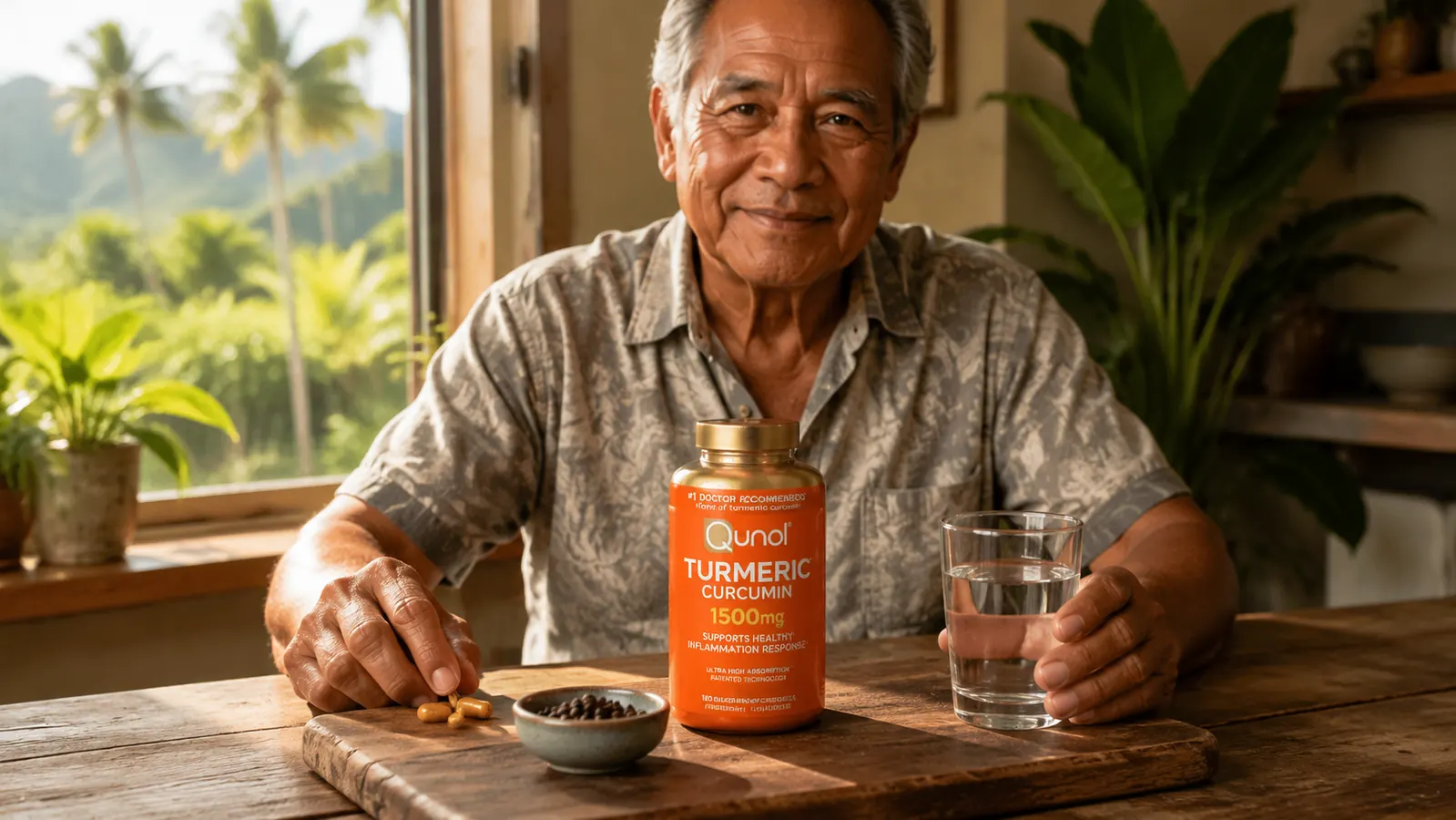
Qunol Turmeric uses a patented ultra-absorption formula that makes curcumin actually bioavailable, which is the detail most cheap capsules skip. It is the starting point for everything in this guide.
Amazon Check Today's Price on Amazon →Step 1: Choose a Form That Your Body Can Actually Absorb
This is where most people go wrong before they even start. Raw turmeric powder, and many inexpensive capsules, have a bioavailability problem. The active compound, curcumin, is poorly absorbed through the gut on its own. It passes through without doing much. You can take a lot of it and still not get the benefit people talk about.
There are two ways around this. The traditional approach is black pepper, which contains piperine, a compound that dramatically increases curcumin absorption. My tutu used to grind turmeric and pepper together into a paste she called a kind of kitchen medicine. She did not know the biochemistry, but she knew it worked better that way. The modern approach, which is what Qunol uses, is a water-dispersible formula that wraps the curcumin in a way that makes it absorb far more efficiently than standard powder. Either way, you need one or the other. A curcumin capsule with no absorption support is mostly a waste.
When you shop, look for: 1000mg to 1500mg of curcumin per serving, either piperine (BioPerine) listed on the label or a patented absorption system like Qunol's ultra-absorption formula, and a vegetarian capsule if you prefer to avoid gelatin. Those three things will take you much further than a high milligram count alone.
Step 2: Take It With Food, Not On an Empty Stomach
Curcumin is fat-soluble. That means it absorbs better when there is some dietary fat present, the way that a little coconut oil or a handful of nuts helps other fat-soluble vitamins like D and K do their job. If you take your turmeric capsules first thing in the morning on a completely empty stomach, you are missing an opportunity.
My own routine is breakfast first, then two capsules. Breakfast does not need to be large. I usually have eggs or a bowl of oatmeal with a small amount of coconut oil stirred in, and that is plenty. What matters is that there is something in your stomach, particularly something with a little fat, when the capsule dissolves. This single adjustment made a noticeable difference for me compared to taking it before eating.
If your mornings are rushed, even a small handful of macadamia nuts or a spoonful of nut butter before your capsule will help. Do not skip the fat. It is not a minor detail.
Step 3: Start at a Consistent Dose and Hold It for at Least Six Weeks
This is where patience matters. Turmeric is not a pain reliever in the way that ibuprofen is. It does not block a signal in the next thirty minutes. What it does, according to a substantial body of research, is influence inflammatory pathways over time, gradually reducing the chronic low-level inflammation that makes joints feel stiff and achy. That process takes weeks, not days.
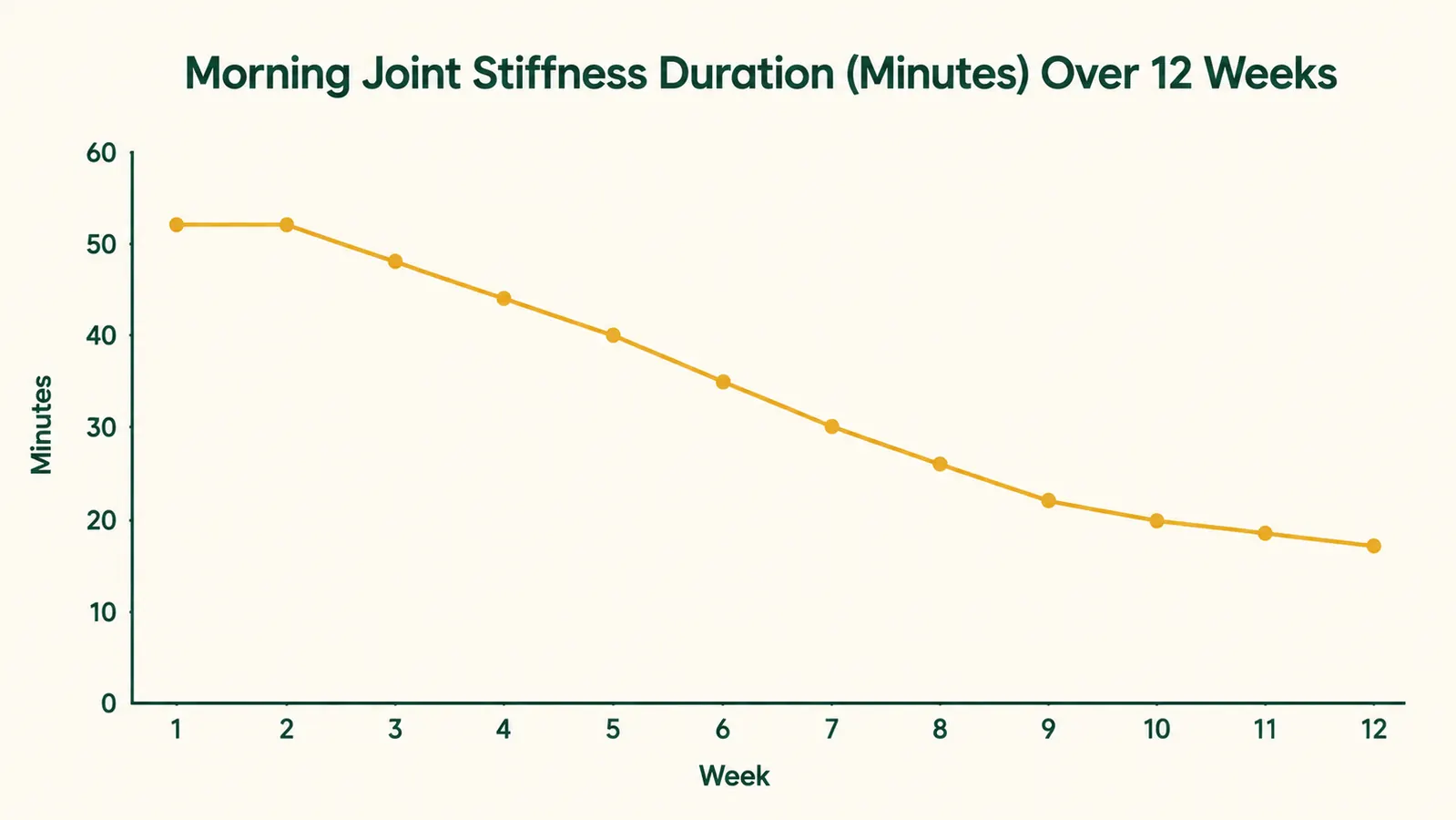
I tell people to commit to six weeks before they evaluate anything. Not two weeks, not one month. Six weeks. In my own experience, I noticed the first real change around week three, a slight reduction in how long my knees felt locked in the morning. By week six, that morning wait had shortened from something close to ten minutes to under two. By week twelve, I had mostly stopped noticing it. That is not a dramatic before-and-after story. It is a slow, quiet improvement, which is exactly how la'au lapa'au teaches us to think about plant medicine. It works with the body, not against it, and it takes time.
The standard dose I follow is 1500mg of curcumin per day, split if possible across two meals, though once per day is fine if your schedule demands it. Do not double up trying to speed things along. More is not always better with curcumin. Consistency over weeks is what produces results.

Step 4: Move the Joint in the First Fifteen Minutes of Your Day
Turmeric handles the internal chemistry, but you have to give your joints something to work with. Stiff joints that stay still get stiffer. The synovial fluid that cushions your cartilage circulates when you move. Sitting in one place waiting for the stiffness to lift is the least effective thing you can do.
What I do every morning, before I even go to the kitchen, is stand at the side of the bed and do a slow, deliberate walk in place for about two minutes. Then I sit back down and gently rotate my ankles in circles, both directions. Then slow knee bends, ten repetitions, holding onto the bedpost if needed. The whole thing takes less than five minutes and it is not exercise in the way people think of exercise. It is circulation. It is telling the joint, the day is starting, let's begin slowly.
After that, if the weather allows, I try to walk outside for at least ten to fifteen minutes before breakfast. Even a slow walk around the yard among the plants does something that no supplement can replace. Movement is not optional if you want to address joint stiffness. The turmeric makes it easier to move. The movement is what makes the stiffness actually resolve.
Step 5: Track How You Feel Weekly, Not Daily
One of the most common mistakes people make with slow-acting supplements is evaluating them every single day. You wake up one morning feeling rough and you think the supplement is not working. You wake up the next day feeling better and you think it is. Neither reading is accurate. Day-to-day variation in joint stiffness is driven by sleep quality, weather, how much you walked the day before, what you ate, and dozens of other factors. Looking for a signal in that daily noise is like trying to read the tide by watching one wave.
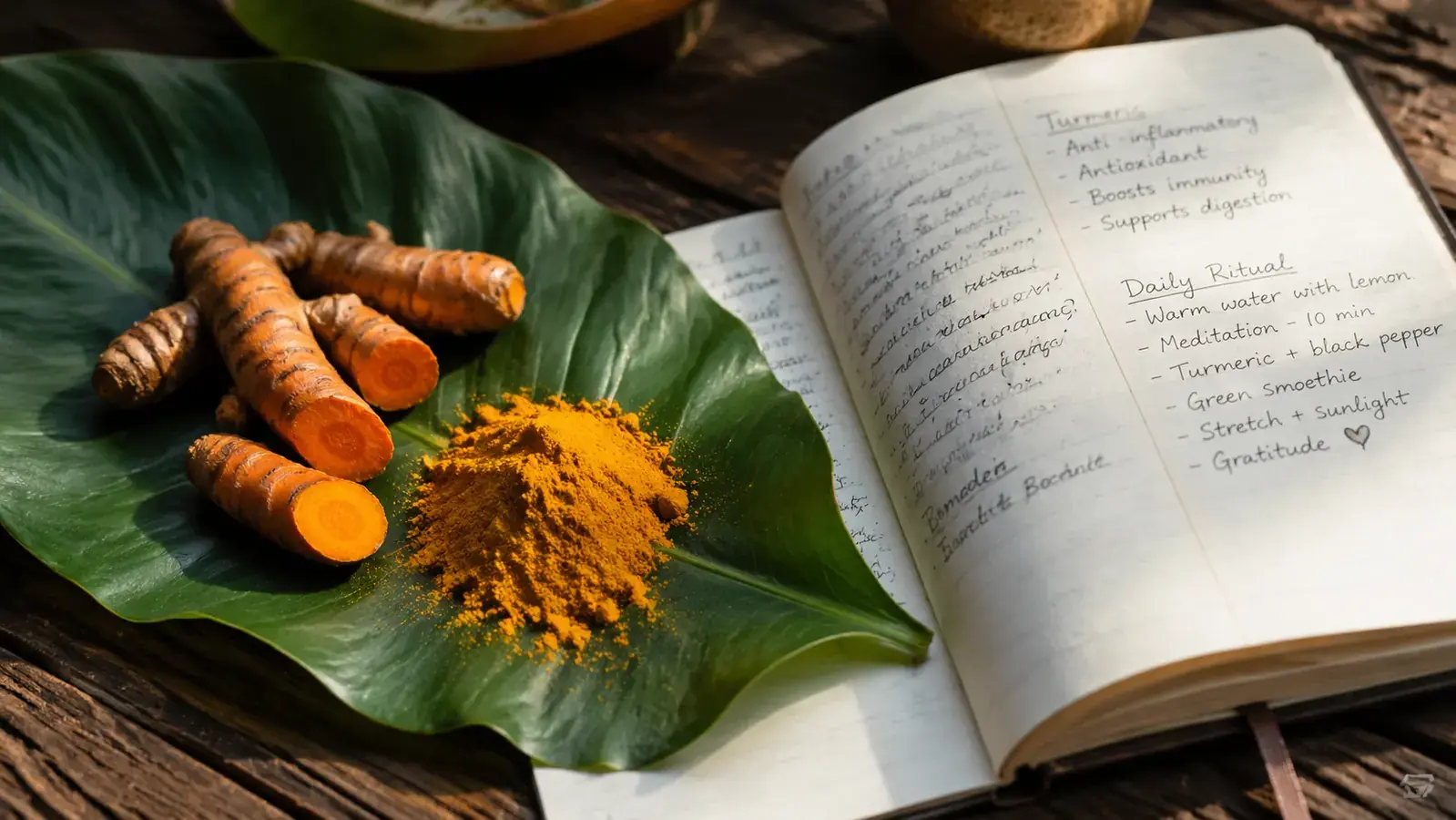
Instead, I keep a simple weekly note. Every Sunday morning, I sit down with my coffee and write a few sentences: How were my mornings this week? How long did it take to feel mobile? Did I take my stairs without thinking about it, or did I notice my knees? That weekly check-in gives me something real to compare. After three or four of them, the trend becomes clear, and that trend is what tells you whether the supplement is earning its place in your routine.
A simple notebook works fine. I have tried apps and they feel like work. A few honest sentences once a week, that is all you need.
What Else Helps
Turmeric works best when it is part of a wider approach rather than the only thing you are doing. A few other things have made a consistent difference for me alongside it. First, warm water in the morning before anything else. Not tea, not coffee, just a glass of warm water when I first wake up. It seems to get things moving at a cellular level, and my joints always feel less stiff when I make that a habit. Second, reducing sugar and refined flour in the diet. I am not strict about this, I am Hawaiian and I enjoy eating, but cutting back on the foods that most aggressively drive inflammation has been more effective for my joint stiffness than anything else beside the turmeric itself. Third, sleep in a room that is not too cold. Cold nights stiffen joints the same way cold water stiffens dough. I sleep with a light blanket over my knees specifically.
If you want to read a deeper look at whether the turmeric form I use is worth the cost compared to generic curcumin supplements, I wrote a full comparison at Qunol Turmeric vs Generic Curcumin. And if you want my longer personal account of what 90 days with this supplement actually looked and felt like, that is at my 90-day Qunol Turmeric review.
Turmeric does not turn off joint pain the way a pill does. It does something quieter: over weeks, it lowers the background noise of inflammation until your joints stop being the loudest thing in the room.
Ready to put this protocol to work? Start with the right turmeric.
Everything in this guide builds from a high-absorption curcumin supplement. Qunol's ultra-absorption formula is the one I use daily. Over 8,900 reviews on Amazon, 4.6 stars, and a capsule that actually gets curcumin where it needs to go.
Amazon Check Today's Price on Amazon →