
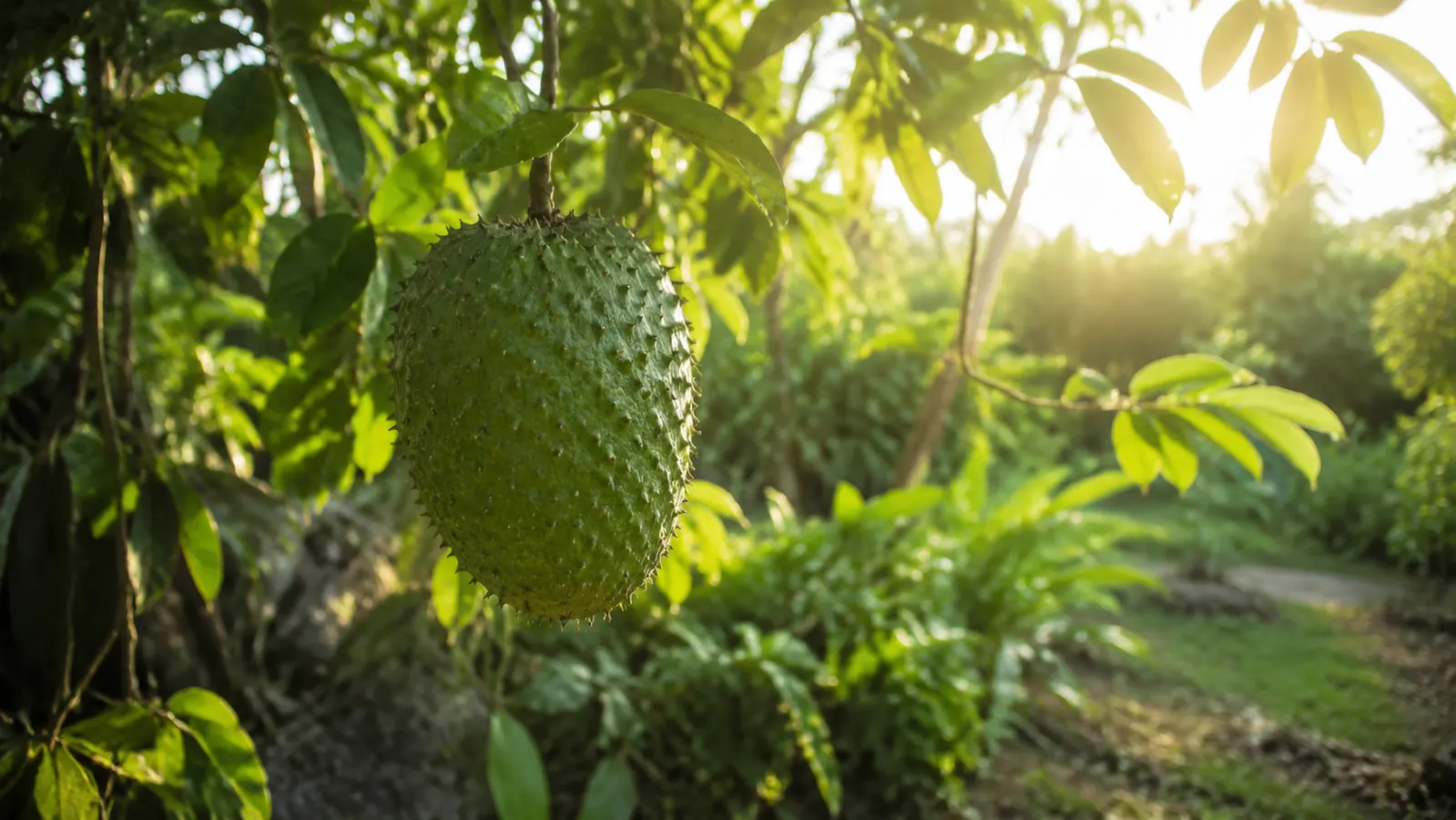
My tutu had a soursop tree in her yard for as long as I can remember. She never called it a supplement. She called it the plant that helped her sleep, settle her stomach, and stay steady through the years. When she wanted a tea that calmed her nerves at the end of a long day, she went out and picked the leaves herself. That tree is long gone now, but the tradition is not. People across Hawaii, the Caribbean, West Africa, and South America have been using soursop leaf in roughly the same ways for a very long time. That kind of staying power does not happen by accident.
I have been using Horbaach Graviola capsules as my modern version of that tradition for the past several months. They are not the same as fresh leaves steeped over a low flame on the stove, but they carry the same plant, and they fit into my mornings without a fuss. Below are ten reasons soursop leaf has earned that kind of longevity in traditional wellness practice, and why I think it is worth understanding before you decide whether it belongs in your routine.
If soursop leaf tradition sounds right for your routine, this is the form I use daily.
Horbaach Graviola capsules deliver the leaf in a clean, Non-GMO, gluten-free formula. Over 3,900 reviewers on Amazon have rated them 4.6 out of 5 stars. Check today's price below.
Amazon Check Today's Price on Amazon →Traditionally Used to Support Immune Balance
Across tropical healing traditions from Brazil to Jamaica to Hawaii, soursop leaf tea was a first-line plant remedy when someone felt run down or like their body was fighting something off. The leaf was not seen as a cure. It was seen as a quiet reinforcement, a way of giving the body more to work with. Modern interest in soursop's bioactive compounds, including acetogenins, polyphenols, and flavonoids, has followed in the same direction. Most people who add it to their routine do so because they want to give their immune system consistent, gentle support, not because they are sick.
Rich in Antioxidant Compounds
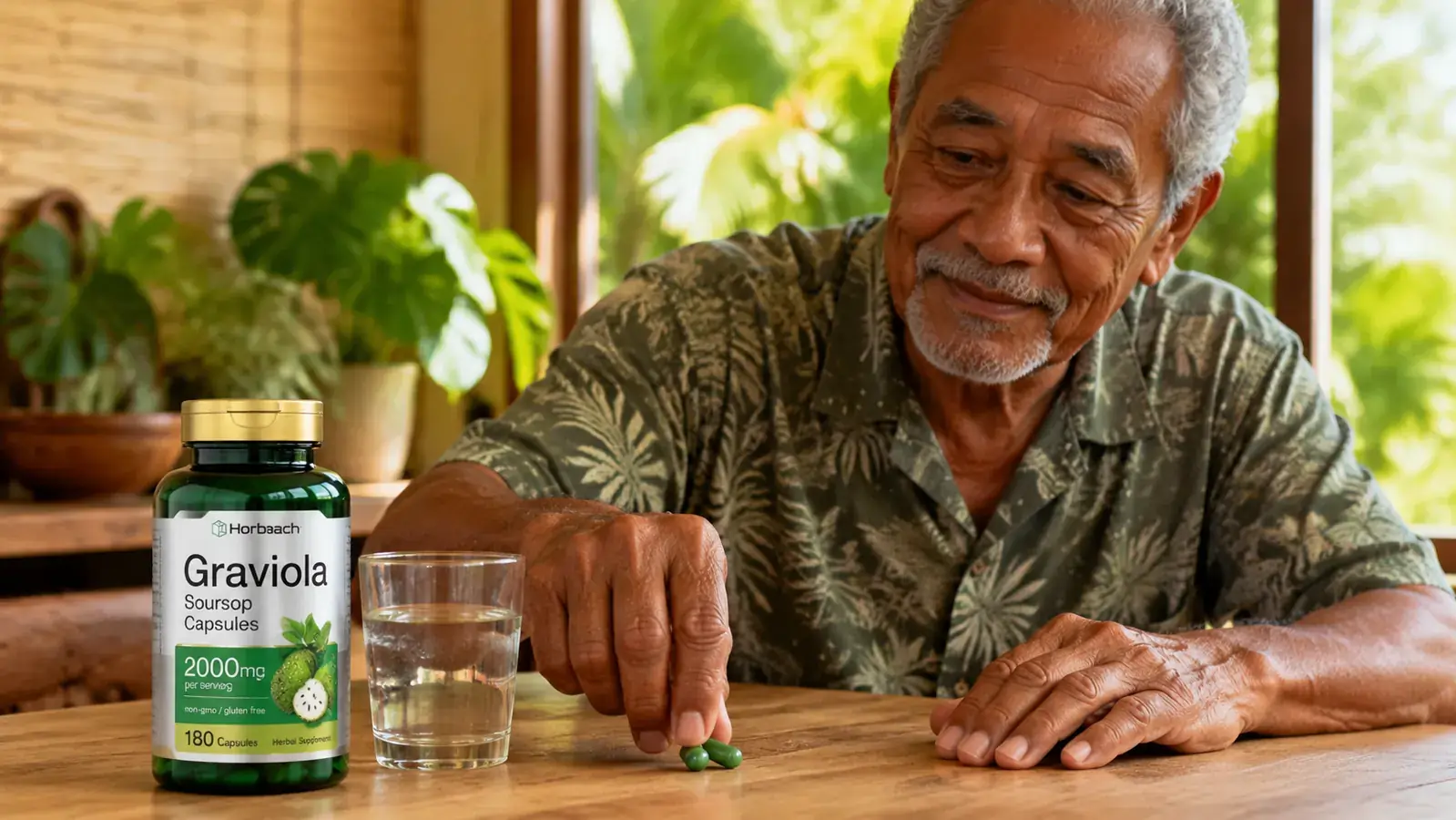
The soursop plant contains a wide range of compounds that researchers classify as antioxidants, including vitamin C, flavonoids, and various polyphenols. In traditional use, the leaf was often described as cleansing or protective, which likely reflects the same underlying properties modern researchers are now cataloging. Antioxidant support is not dramatic. It is quiet, cumulative work that happens at the cellular level. That steady, unglamorous kind of benefit is exactly what traditional healers valued most.
Long History of Use for Calming the Nervous System
In many Caribbean and Pacific Island traditions, soursop leaf tea was specifically prepared for people who were anxious, wound up, or having trouble settling into sleep. My tutu would steep the leaves for a neighbor who had trouble with her nerves. She never made big promises about it. She just said it helped people slow down. Whether that effect comes from the plant's alkaloid content or something else entirely, the folk use was consistent enough across cultures and generations that it deserves serious attention.
Traditionally Used to Support Healthy Sleep
Closely related to its calming reputation, soursop leaf was used in traditional settings as an evening plant. People drank the tea before bed, and the practice passed down through families the way a good recipe does, not because anyone studied it, but because it seemed to help. People who take Horbaach Graviola capsules in the evening often report that this is still one of the primary reasons they keep coming back to it. I take mine at night, and while I can not say it knocks me out, my evenings do feel quieter.
She never called it a supplement. She called it the plant that helped her sleep, settle her stomach, and stay steady through the years.

Used Across Multiple Cultures Independently
One of the things that gave my tutu confidence in soursop leaf was that she had heard about it from relatives who had relatives from different places entirely. People in the Philippines used it. People in Nigeria used it. People in Peru used it. When a plant shows up in the traditional medicine of multiple unconnected cultures with similar applications, that pattern tells you something. It does not prove anything in the clinical sense. But it is the kind of evidence that traditional healers took seriously, and so do I.
Traditionally Supported Digestive Comfort
Soursop leaf was also used in traditional settings for settling an uneasy stomach, reducing bloating after a heavy meal, or calming the kind of low-level digestive restlessness that many older adults deal with daily. In la'au lapa'au, the Hawaiian healing tradition, plant remedies were often given attention for their digestive effects first, because healers understood that a settled gut was the foundation of everything else. Whether this effect comes from the leaf's fiber content, its compounds, or simply the ritual of slowing down to drink hot tea, people found it useful.
Traditionally Used to Support Healthy Inflammation Response
In the same way turmeric has long been used across South Asian and Pacific cultures for its warming, anti-inflammatory properties, soursop leaf has been employed in tropical traditions to help the body manage its own inflammation response. This is not a cure for anything. Traditional healers were careful about that. But supporting the body's natural ability to stay in balance was the whole goal of plant medicine, and soursop leaf was seen as a useful tool in that effort, particularly for people who did a lot of physical work.
The Whole Plant Has Multiple Useful Parts
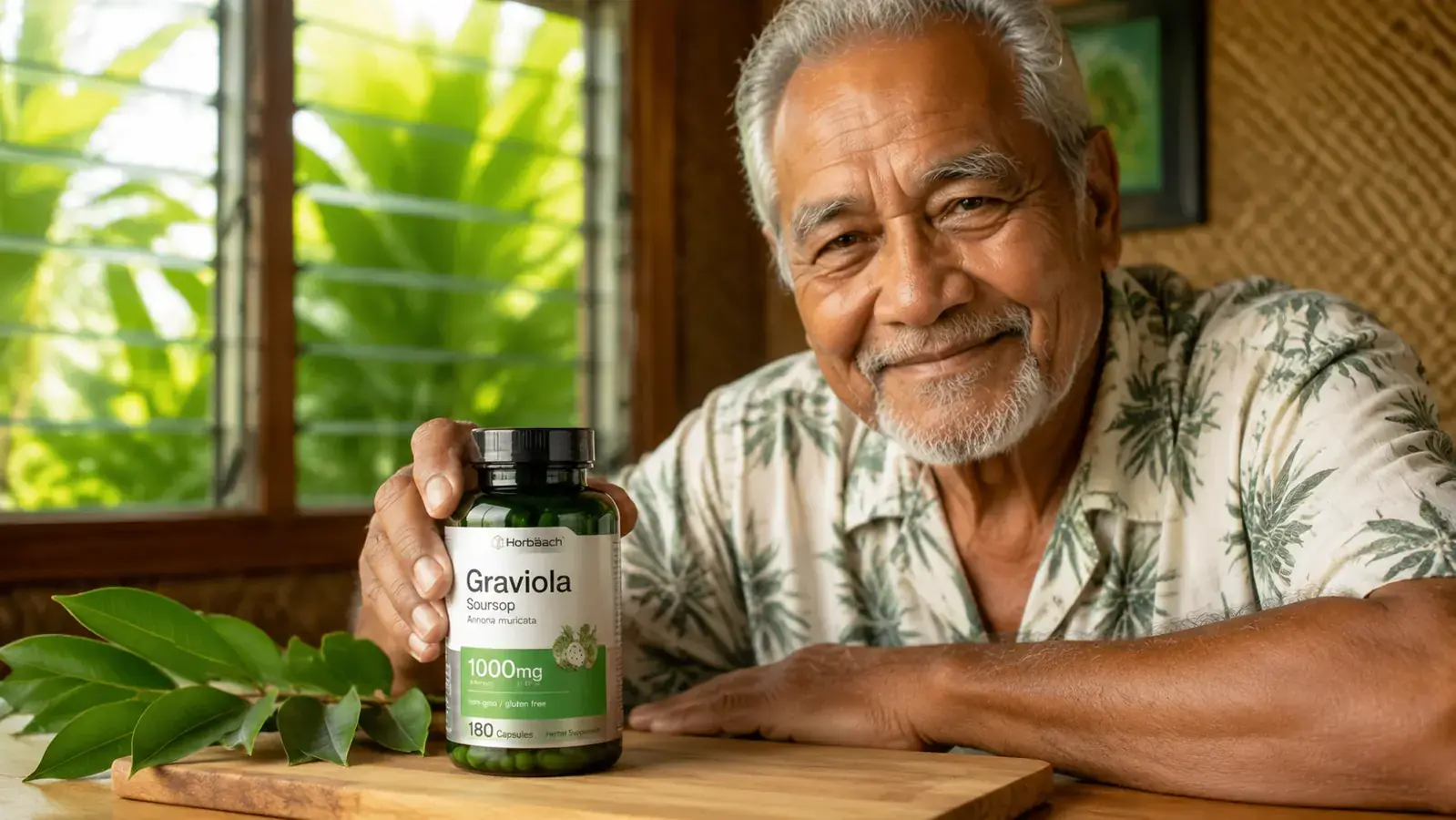
Unlike some supplements that draw from a single compound in a single part of a plant, soursop has a tradition of using the leaves, the fruit, the bark, and even the seeds for different purposes. The leaves were most commonly used for teas and poultices. The fruit was eaten for nutrition and joy. The bark was sometimes used for other applications. This depth of use reflects genuine familiarity with the plant across generations, not just passing curiosity. It is a plant people lived with, not one they read about.
Clean Supplement Options Are Now Widely Available
Part of what kept soursop in the traditional backyard for so long was simply that it had not found its way into a reliable modern form. That has changed. Horbaach Graviola capsules are Non-GMO, gluten free, and manufactured to third-party standards. For people who no longer have access to a soursop tree, and most of us do not, a well-made capsule is the closest practical equivalent. I still think my tutu would have preferred the fresh leaf. But she also would have appreciated having the option.
It Fits Into a Consistent Daily Wellness Routine
Traditional plant medicine was never about taking something once and expecting a result. My tutu drank her soursop tea regularly, the way she tended her garden regularly, the way she walked to the water in the morning. The consistency was the medicine as much as the plant itself. Modern capsule-form soursop makes that consistency easier to maintain because there is nothing to prepare and no equipment to clean. Two capsules with water each evening is a small commitment, and small consistent commitments are how lasting wellness habits are actually built.
What I Would Skip
Not every soursop product deserves the tradition it is borrowing from. I have seen capsules with fillers I could not pronounce, loose leaf teas with no sourcing information, and extracts making claims that no plant on earth could honestly make. If you are going to bring soursop into your routine, pick something that keeps its ingredient list short and its manufacturing standards high. Horbaach does that. Some of the others I have looked at do not. Also, if you are pregnant, nursing, or taking medication, talk to your doctor before adding any plant supplement. That is not a legal disclaimer. That is just common sense that my tutu would have told you herself.
And if you are looking for a deep dive into what using Horbaach Graviola actually felt like over two months of daily use, read my full long-term review at Horbaach Graviola Review: 60 Days With the Plant My Grandmother Called a Gift. For a more critical look at where the capsule does and does not match the fresh plant, see Horbaach Graviola: A No-Fluff Review From Someone Who Grew Up With the Real Plant.
Traditional plant medicine was never about taking something once and expecting a result. The consistency was the medicine as much as the plant itself.
Ready to bring soursop into your daily routine the way generations before you did?
Horbaach Graviola capsules are the form I trust, 120 count, Non-GMO, gluten free. Check today's price and availability on Amazon.
Amazon Check Today's Price on Amazon →